

Sri Lanka’s Cabinet has approved a series of policy decisions aimed at improving migration management, supporting families affected by natural disasters and strengthening road safety across the country.

New migration action plan approved
The Government has officially adopted the National Implementation Plan 2026–2028 under the Global Compact for Safe, Orderly and Regular Migration, marking another step in Sri Lanka’s long-term approach to managing international migration.
The Global Compact, endorsed by Sri Lanka, is the first United Nations agreement designed to help countries manage migration in a safer and more coordinated way. For Sri Lanka, where overseas employment plays a major role in the economy, the plan focuses on creating better opportunities for workers while making migration more secure and beneficial.
Alongside promoting overseas employment, the plan aims to strengthen skills development, encourage higher foreign remittances and improve cooperation in tackling human trafficking and migrant smuggling.
Sri Lanka first established an implementation committee in 2021, with its initial action plan prepared the following year. However, the country’s economic crisis delayed much of the work. After being re-established in 2025 and consulting with government agencies and other stakeholders, the committee produced an updated plan, which has now received Cabinet approval.
New land allocation system for displaced families
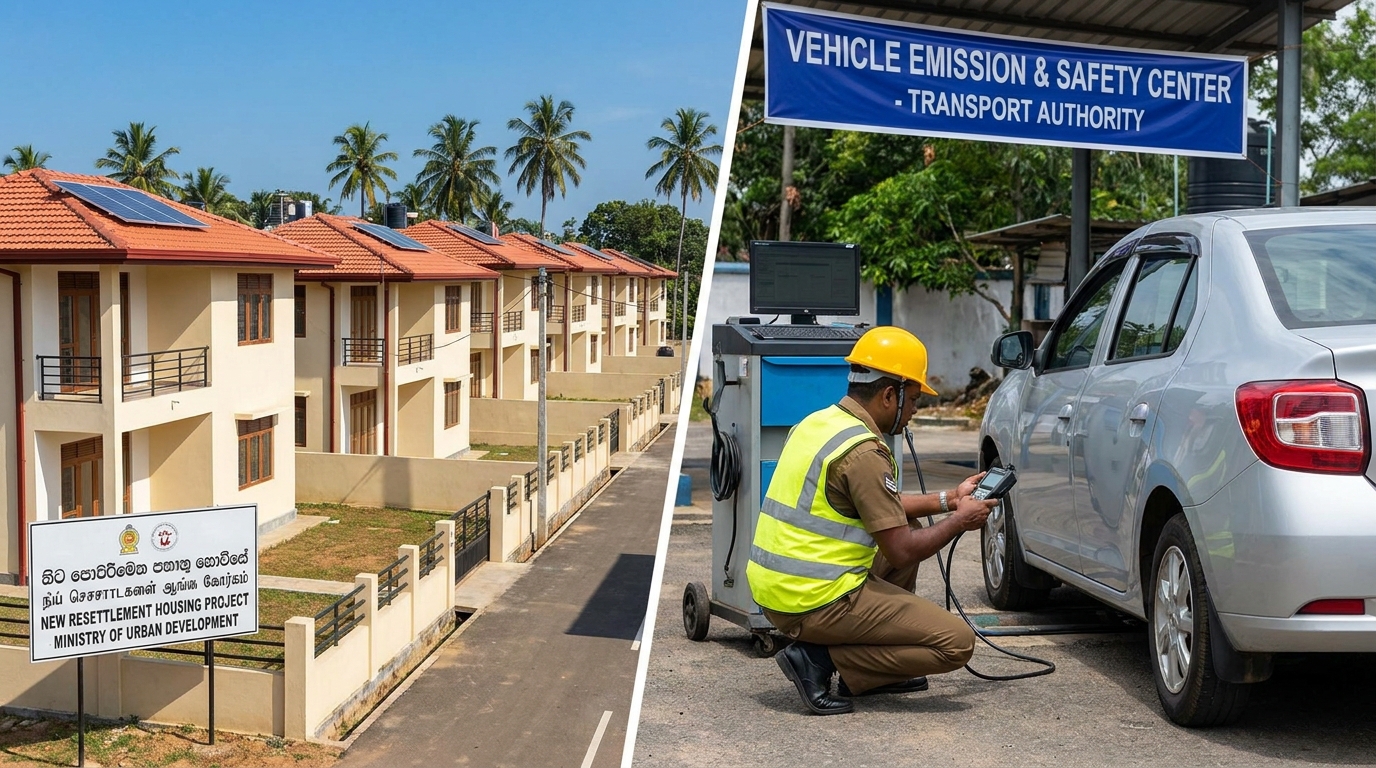
The Cabinet has also approved a new mechanism to help resettle families displaced by Cyclone Ditwah, particularly those whose homes were destroyed or who continue to live in areas at high risk of landslides.
Because available State-owned land is limited, the Government has introduced several options to increase the supply of land for resettlement.
Under the new framework, land previously allocated through State permits may be reassigned if it is suitable for housing displaced families. Existing permit holders will be compensated for any developments they have made before the land is transferred to another eligible family.
The Government will also accept privately donated land for resettlement. Once ownership has been legally transferred to the State, these plots can be used to provide permanent housing for affected families.
Where no other suitable land is available, eligible households will receive plots of up to 10 perches, with ownership granted under Sri Lanka’s State Lands Ordinance.
The decision is expected to speed up the resettlement process while providing a clearer legal framework for land allocation after natural disasters.
Tougher vehicle inspection rules
Road safety was another key topic discussed by the Cabinet.
Ministers approved a proposal to present the Motor Vehicles (Inspection) Regulations No. 03 of 2026 to Parliament, paving the way for mandatory roadworthiness inspections for several categories of public and commercial vehicles.
The decision follows investigations into a number of serious road accidents where mechanical faults were identified as contributing factors.
If approved by Parliament, the inspection system will apply to:
- Passenger transport services regulated by the National Transport Commission.
- Provincial passenger transport operators.
- Sri Lanka Transport Board vehicles.
- School transport services.
- Employee transport services.
- Vehicles hired for special trips.
The regulations are intended to improve vehicle safety standards, reduce accidents caused by mechanical failures and strengthen public confidence in commercial transport services.
Why these decisions matter
Together, these Cabinet decisions highlight several of the Government’s current priorities: improving migration governance, accelerating disaster recovery and raising public safety standards.
While the migration plan is primarily designed to support Sri Lankan workers overseas, stronger migration policies and closer international cooperation can also contribute to greater economic stability over time. At the same time, clearer land policies for disaster recovery and improved transport safety are important steps towards building resilience and supporting long-term development across the country.
What could this mean for foreigners?
Although these Cabinet decisions are primarily focused on Sri Lankan citizens and domestic policy, they also send positive signals for foreigners living in or considering investing in the country.
The new migration plan demonstrates Sri Lanka’s commitment to working more closely with international partners and following globally recognised standards on migration. Over time, this could contribute to a more transparent and predictable environment for foreign workers, international businesses and overseas investors, particularly as the country continues to rebuild its economy and strengthen international cooperation.
The approval of a structured land resettlement mechanism is also significant. While it does not change the rules governing foreign property ownership, it shows that the Government is putting clearer legal processes in place for managing land following natural disasters. For investors, stronger land administration and better disaster recovery planning can help increase confidence in the country’s long-term stability.
The proposed vehicle inspection regulations may also benefit foreigners, especially tourists, expats and business travellers who rely on public transport or private hire vehicles. Higher vehicle safety standards should reduce the risk of accidents caused by mechanical failures and improve confidence in Sri Lanka’s transport network.
Taken together, these decisions suggest that Sri Lanka is continuing to focus on strengthening governance, improving public services and aligning with international standards. While none of the measures directly alter investment or visa regulations, they form part of the wider reforms that many international investors and expatriates look for when assessing a country’s long-term potential.