Why this matters for foreign investors
The government’s announcement is about much more than increasing visitor numbers.
It sends a strong message that tourism remains one of Sri Lanka’s biggest economic priorities for the coming years.
Whenever a country invests heavily in tourism, the effects are usually felt far beyond hotels and beaches. More visitors create demand for accommodation, restaurants, transport, experiences and supporting services.
For foreigners already investing in Sri Lanka—or considering it—this is an encouraging sign.
More tourists mean more demand
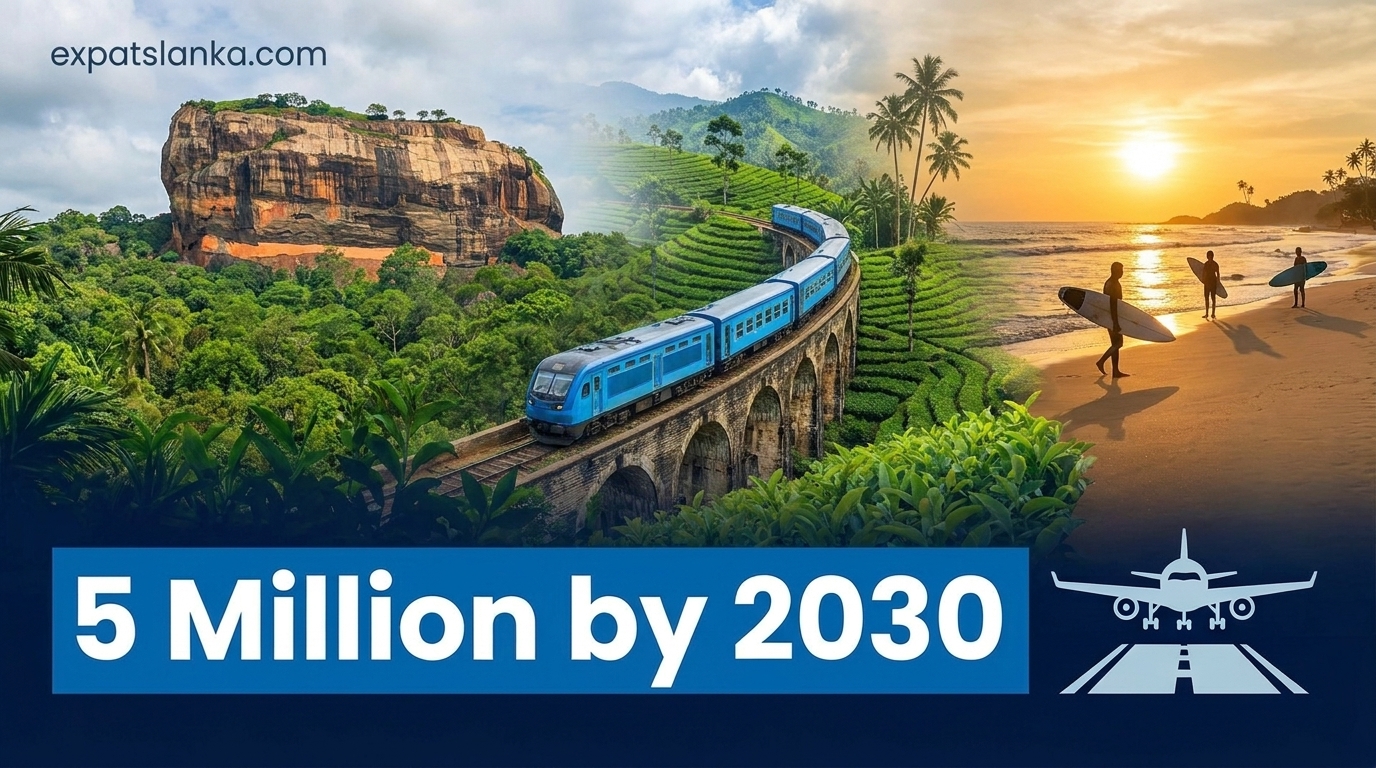
If Sri Lanka reaches its target of 5 million visitors each year, the demand for tourist accommodation is likely to increase significantly.
This could benefit businesses such as:
- Boutique hotels
- Guesthouses
- Villas
- Holiday apartments
- Surf camps
- Wellness retreats
- Restaurants and cafés
- Tour operators
- Transport companies
- Property management businesses
Not every area will benefit equally, but locations with established tourism industries could experience continued growth.
Property investment could become even more attractive
Growing tourism often creates greater demand for short-term holiday accommodation.
Areas already popular with international visitors—including Weligama, Mirissa, Ahangama, Unawatuna, Galle, Hiriketiya, Arugam Bay and parts of the south-west coast—could continue to attract both tourists and investors.
Higher visitor numbers may improve occupancy rates for holiday rentals and create opportunities for investors looking to develop boutique accommodation or tourism-related properties.
However, it’s important to remember that higher tourist numbers do not automatically guarantee higher profits. Successful investments still depend on location, property quality, professional management and changing travel trends.
What foreign buyers should know
One of the biggest misconceptions among overseas investors is that foreigners can simply buy land in Sri Lanka.
The reality is more complicated.
Foreign nationals generally cannot purchase land in their own name. Many overseas investors instead use legally recognised structures, such as investing through a Sri Lankan company, depending on their individual circumstances and current regulations.
Because every situation is different, anyone considering investing should seek professional legal and tax advice before making a commitment.
Understanding the legal structure before investing can save significant time, money and unnecessary complications later.
Could this create new business opportunities?
The Tourism Vision 2030 is not only good news for property investors.
It could also create opportunities for entrepreneurs looking to build businesses that support the growing tourism industry.
Potential growth areas include:
- Boutique accommodation
- Holiday rental management
- Hospitality services
- Wellness and health tourism
- Adventure tourism
- Surf schools
- Restaurants and cafés
- Tourism marketing
- Construction and renovation
- Transport services
As visitor numbers increase, demand often grows for businesses that improve the overall travel experience—not just accommodation.
What about existing property owners?
For foreigners who already own or operate tourism-related businesses in Sri Lanka, the government’s long-term strategy is encouraging.
If visitor numbers continue to rise, existing businesses could benefit from:
- Increased booking enquiries
- Longer tourist seasons
- Higher occupancy rates
- Greater international awareness of Sri Lanka
- More opportunities to expand services
Of course, competition is also likely to increase as more investors enter the market.
Providing high-quality accommodation and excellent customer service will remain essential.
What should expats and investors do now?
Although the government’s targets are ambitious, planning ahead is always better than reacting later.
If you’re considering investing in Sri Lanka, now may be a good time to:
- Research different regions before making a decision.
- Learn about Sri Lanka’s property ownership rules.
- Study local tourism trends rather than relying on assumptions.
- Speak with trusted legal and financial professionals.
- Visit different areas before choosing where to invest.
Taking time to understand the market today could put you in a stronger position if tourism continues to grow over the coming years.
Why is Sri Lanka focusing on tourism?
Tourism has long been one of Sri Lanka’s most important industries.
It provides employment for hundreds of thousands of people while bringing valuable foreign currency into the country.
After facing major challenges in recent years—including the COVID-19 pandemic, the economic crisis and natural disasters—the tourism industry has shown strong signs of recovery.
The government’s new Tourism Vision 2030 aims to build on that recovery and position Sri Lanka as one of Asia’s leading travel destinations.
Whether the ambitious targets are fully achieved remains to be seen, but the direction is clear: tourism is expected to play a central role in Sri Lanka’s future economy.