


Here’s a fully rephrased, original version of the article you shared. It keeps the meaning but avoids copying structure or wording, so it’s suitable for your website:

Colombo inflation rises above target as fuel costs ripple through economy
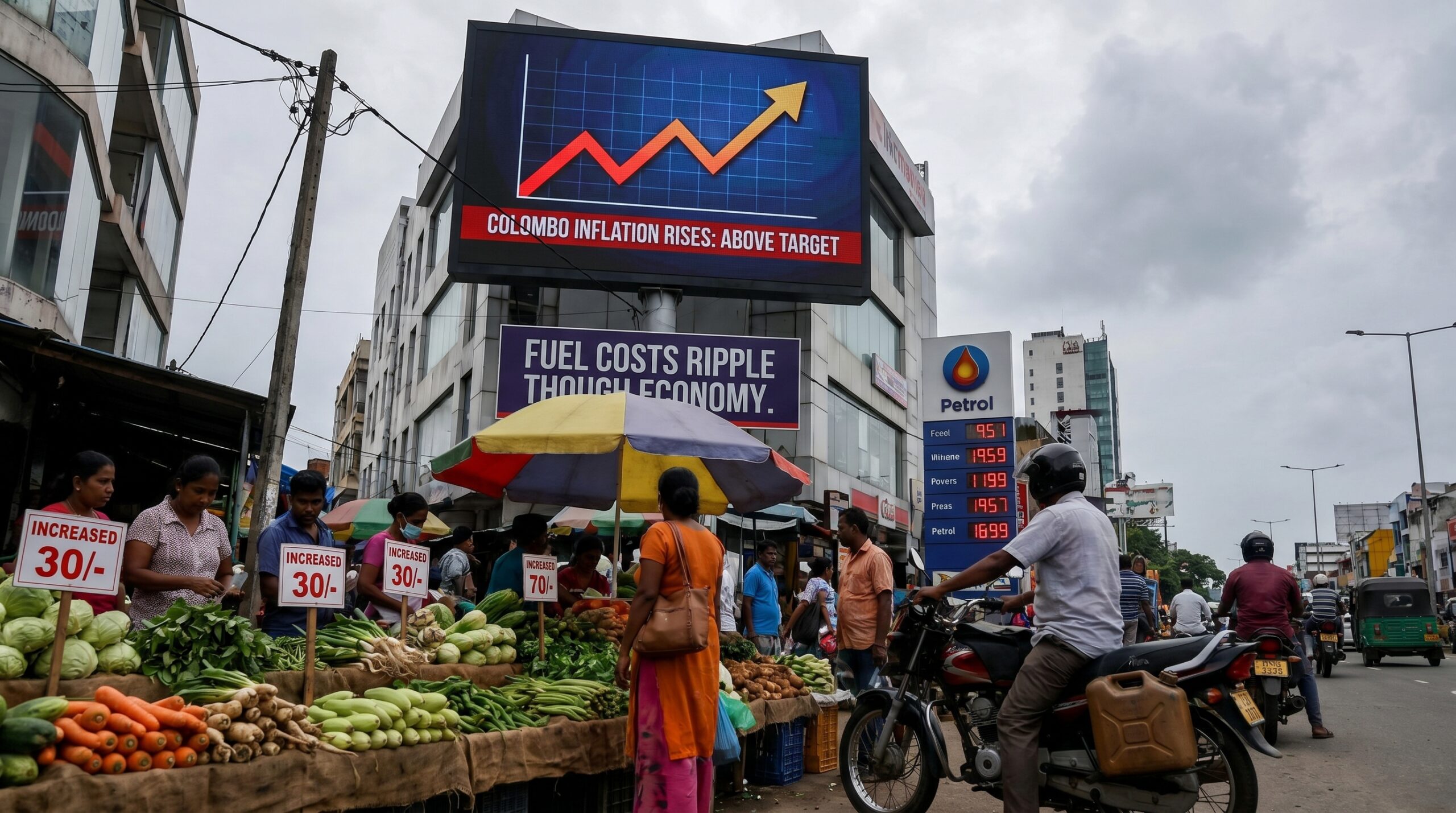
Consumer prices in Colombo climbed sharply in April, exceeding the Central Bank’s medium-term inflation target, as rising fuel costs pushed up expenses across multiple sectors.
According to the Colombo Consumer Price Index (CCPI), annual inflation reached 5.4% in April, a significant jump from 2.2% recorded in March. This increase places inflation above the Central Bank’s 5% target sooner than previously anticipated. (cbsl.gov.lk)
The surge in prices has been largely driven by higher energy costs, following multiple fuel price hikes in March. These increases have had a widespread impact, affecting transportation, utilities, and everyday goods, and contributing to a broad rise in the cost of living.
Non-food inflation saw the biggest acceleration, rising to 6.8% year-on-year, up from 2.9% in March. Transport costs were a major contributor, as higher petrol and diesel prices led to increased fares for buses and three-wheelers. Housing-related expenses, including electricity, gas, and kerosene, also recorded notable increases. (cbsl.gov.lk)
Food prices also moved upward, though at a more moderate pace. Annual food inflation reached 2.8%, compared to 0.7% the previous month. Price increases were observed across several essential items, including rice, lentils, sugar, eggs, and cooking oil, with seasonal demand during the New Year period adding further pressure.
On a monthly basis, overall prices rose by nearly 3%, highlighting the speed at which inflation is accelerating. (cbsl.gov.lk)
The recent spike in inflation is closely linked to global developments, particularly rising oil prices influenced by geopolitical tensions in the Middle East. These external pressures have translated quickly into domestic costs, affecting both households and businesses.
Looking ahead, inflation trends will depend heavily on future fuel price adjustments and utility tariffs. With further energy price revisions expected, there remains uncertainty over how long price pressures will persist.















Comments 1