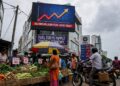


Sri Lanka’s annual inflation rate reached 8.1% in August 2026, up from 7.2% in July and 2.4% at the beginning of the year.

For foreigners living in Sri Lanka, the headline number matters because price pressure is appearing in areas that form a significant part of everyday household spending, including transport, fuel, food, housing-related costs and services.
However, the figure needs to be understood properly. An inflation rate that has risen from 2.4% to 8.1% does not mean prices have tripled. It means the pace at which prices are higher compared with the same period last year has increased substantially.
For expats, retirees, digital nomads, property owners and investors, the more useful question is therefore not simply how high inflation is, but which costs are increasing and how those increases affect individual lifestyles and investments.
Sri Lanka’s Department of Census and Statistics reported that the National Consumer Price Index, known as the NCPI, reached 223.9 in August 2026, with year-on-year inflation rising to 8.1%.
The NCPI measures changes in household expenditure across all nine provinces, making it one of the broadest measures of changes in consumer prices in Sri Lanka.
Inflation has moved noticeably higher during 2026. It stood at 2.4% in January, 1.6% in February, 2.4% in March, 4.7% in April, 5.4% in May, 6.5% in June, 7.2% in July and 8.1% in August.
Food inflation increased from 4.9% in July to 6.6% in August, while non-food inflation reached 9.3%.
Transport was one of the largest contributors to the rise, driven particularly by petrol, diesel and bus fares. Housing, water, electricity, gas and other fuels also contributed significantly.
Within food, price increases were recorded across products including fish, chillies, onions, fruit, milk powder, vegetables, eggs and chicken, while some products, including rice and coconuts, recorded lower prices.
Colombo showed a similar pattern. The Colombo Consumer Price Index recorded annual inflation of 8.0% in August, with food inflation at 8.5%.
The difference between the two measures is useful for foreigners to understand. The CCPI focuses on urban households in the Colombo District, while the NCPI covers household expenditure nationally. An expat living in Colombo may therefore experience a different pattern of price changes from someone living in Galle, Kandy, Negombo or a smaller town.
ExpatsLanka Analysis: What does this mean for foreigners?
Daily life and cost of living
The most visible impact is likely to be felt through household budgets.
Foreign residents who drive regularly will notice changes in fuel costs directly. Higher fuel costs can also affect private transfers, delivery charges, public transport and the cost of moving goods around the country.
Food is another area where personal experience may differ considerably from official averages.
A household buying mostly local produce may experience different price increases from one that regularly purchases imported dairy products, cereals, specialist foods or other imported goods.
This is why national inflation should be treated as an economic indicator rather than a precise measure of an individual expat’s cost of living.
Housing-related expenses are also important, particularly for people living in larger properties. Villas with air conditioning, swimming pools, water pumps and significant electricity use can have very different monthly running costs from smaller apartments.
The same applies to restaurants, hospitality businesses and holiday rentals, where energy, transport, food and staffing costs can all influence operating expenses.
Financial impact
For foreigners earning in pounds, euros, US dollars or Australian dollars, the effect of inflation depends partly on what happens to the Sri Lankan rupee.
Higher local prices do not automatically mean Sri Lanka becomes more expensive in foreign-currency terms.
If the rupee weakens, some of the increase in local prices may be offset for someone converting foreign currency. If the exchange rate remains stable, the rise in domestic prices becomes more visible.
For this reason, expats should consider both local inflation and exchange-rate movements when comparing their monthly spending over time.
Interest rates and borrowing
The Central Bank of Sri Lanka increased its Overnight Policy Rate to 8.75% in May 2026 and maintained that level at its July review.
This is more relevant to foreign business owners, developers and investors using local credit than to retirees or digital nomads who fund their lifestyle from overseas income.
Higher interest rates can increase the cost of borrowing and may influence vehicle finance, business expansion and property development.
They can also affect the wider economy by reducing the speed at which credit and spending increase.
Property and investment
Inflation should not be treated as a direct indicator of property prices.
For developers, increasing transport, energy and material costs can raise construction expenses. This is particularly relevant to projects sold off-plan, where there may be a significant period between the original sale and completion.
Property values themselves are influenced by a much wider set of factors, including location, tourism demand, infrastructure, available supply, financing conditions and foreign investment.
The Central Bank’s Land Valuation Indicator for Colombo District increased by 5.9% year on year during the first half of 2026, with residential land increasing by 6.7%.
Those figures relate specifically to Colombo District and should not be used as evidence that property prices across Sri Lanka are moving at the same rate.
Foreign investors should therefore separate consumer inflation, construction costs and property-price movements when analysing an investment. They measure different things.
Travel and tourism
Inflation does not create new airport or immigration procedures, but it can influence what visitors pay once they arrive.
Transport, tours, accommodation and hospitality businesses all operate with costs that can be affected by energy, food and wage pressures.
Global energy prices remain particularly important for Sri Lanka because the country imports fuel. Large changes in international oil prices can therefore influence domestic transport costs and parts of the wider economy.
Why has inflation risen?
Two factors are influencing the current figures.
The first is genuine upward pressure from areas including transport, energy and food.
The second is what economists call the base effect.
Sri Lanka experienced unusually low inflation and periods of deflation during 2024 and 2025. As those low-price comparison months fall out of the annual calculation, the year-on-year inflation rate can rise even when prices are increasing relatively slowly from one month to the next.
This can be seen in the August figures.
The national consumer price index increased by only around 0.2% between July and August, even though annual inflation rose from 7.2% to 8.1%.
That distinction is important. It shows that the increase in annual inflation does not mean prices are currently rising by 8% every month.
Sri Lanka’s official inflation target is 5%, and the Central Bank expects inflation to remain above that level in the near term before moving closer to target over the medium term.
Global oil prices, domestic energy costs and exchange-rate movements will remain important factors to watch.
What should expats do now?
There is no need to make major financial decisions based solely on one inflation figure.
A better approach is to review your own spending.
Compare current costs for groceries, transport, electricity, property maintenance, insurance, household staff and services with what you were paying six or twelve months ago.
Property investors should update operating-cost and construction assumptions rather than automatically assuming that higher inflation will produce higher rental income or stronger property values.
Business owners should pay particular attention to fuel, electricity, imported goods and transport costs, as these can affect profit margins even when sales remain stable.
For official information, the most useful sources are the Department of Census and Statistics for inflation data and the Central Bank of Sri Lanka for monetary policy, exchange rates and broader economic indicators.
Frequently Asked Questions
What is Sri Lanka’s inflation rate in 2026?
National Consumer Price Index inflation reached 8.1% year on year in August 2026, compared with 7.2% in July.
Have prices in Sri Lanka tripled?
No. The rate of inflation has risen from 2.4% in January to 8.1% in August. This does not mean that the actual price of goods and services has tripled.
Is Sri Lanka becoming more expensive for expats?
Some expenses are increasing, particularly transport, energy and certain foods. The effect on each foreign resident will depend on location, lifestyle, spending habits and the currency in which they receive income.
Will inflation weaken the Sri Lankan rupee?
Not necessarily. Currency movements are influenced by many factors, including tourism earnings, imports, exports, remittances, foreign reserves, interest rates and investor activity.
Does inflation mean Sri Lankan property prices will rise?
Not automatically. Inflation can increase development and operating costs, but property values depend on location, demand, supply, financing and wider investment conditions.
Should expats change their financial plans?
There is no reason to react to a single monthly inflation report. However, long-term residents and investors should regularly update budgets and financial assumptions using current costs rather than relying on figures from previous years.
Final Thoughts
Sri Lanka’s rise to 8.1% inflation marks a clear change from the unusually low inflation environment seen during the previous two years.
For foreigners, the important issue is not the headline alone but how individual expenses are changing.
Household budgets, property operating costs and business expenses should be reviewed regularly, particularly where transport, energy, food and imported goods represent a large share of spending.
The current figures do not indicate that every part of the economy is becoming more expensive at the same rate. They do, however, show why budgets prepared in 2024 or 2025 may no longer reflect the cost of living in Sri Lanka today.
ExpatsLanka will continue monitoring inflation, the Sri Lankan rupee, energy prices, property costs and Central Bank decisions to explain what economic changes mean in practical terms for foreigners living and investing in Sri Lanka.
How much does it cost to live in Colombo in 2026 as an expat?
Colombo inflation rises above target as fuel costs ripple through economy