


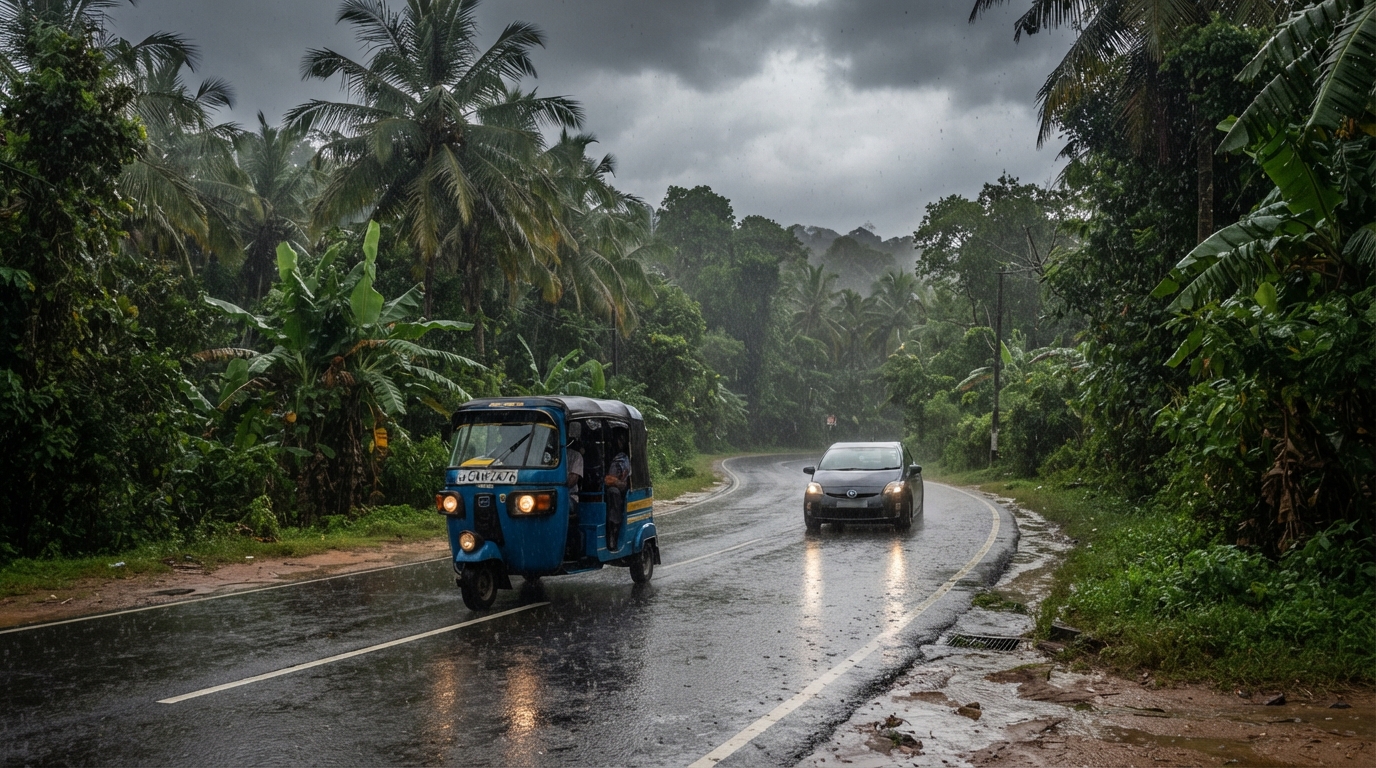
Several parts of Sri Lanka are dealing with difficult weather conditions following sustained rainfall, with flood warnings, landslide alerts, strong winds and rough sea conditions all being monitored by the authorities.

For foreigners living or travelling in Sri Lanka, the situation requires some perspective. This is not a case of the whole country being affected in the same way. Conditions can change considerably between districts and even between different areas within the same district.
The practical concern is therefore less about whether Sri Lanka is experiencing bad weather and more about exactly where you live, where you are travelling and what type of warning applies to that location.
Sri Lanka Digital Nomad Visa: 2026
The consequences are already being felt. According to the Disaster Management Centre, 1,616 people from 458 families across 10 districts had been affected by the adverse weather by 22 September. One person had died, another was reported missing and some families had been moved to safety centres.
For expats, long term residents and visitors, the priority now is to understand the different warnings and adjust plans according to local conditions rather than relying on a general weather forecast.
Heavy rainfall over recent days has increased river levels and saturated ground in several parts of Sri Lanka.
The Irrigation Department has extended flood warnings for the Kuda Ganga sub basin of the Kalu Ganga and the Gin Ganga, meaning people living or travelling through vulnerable low lying areas should continue to monitor river conditions.
At the same time, landslide warnings have been issued in parts of the country where continued rainfall has made slopes unstable. These warnings are particularly important in mountainous and hilly regions, where the risk may affect not only houses but also roads leading through the area.
The weather has also disrupted education. Thirty eight schools were closed on 21 September because of conditions in affected areas, illustrating how decisions are being taken locally rather than through a nationwide closure.
Separate warnings apply at sea. The Department of Meteorology has issued a Red Warning for strong winds and rough seas for multi day boats operating in designated areas of the Bay of Bengal.
This distinction is important. A Red Warning for marine areas does not automatically mean that people living on land are under an evacuation order. Sri Lanka uses different warnings for weather, flooding, landslides and sea conditions, and each needs to be read according to the location and risk it refers to.
The main issue is local access, not nationwide disruption
For most foreign residents, the immediate impact is likely to be practical rather than administrative.
Road conditions can change quickly after prolonged rain. Smaller roads may flood, fallen trees can block routes and access through hilly areas can become difficult even when major highways remain open.
This is particularly relevant for anyone travelling between Colombo and the hill country, moving around central Sri Lanka or staying in rural accommodation reached by smaller roads.
A navigation app can tell you where a road is located. It cannot reliably tell you whether that road has just flooded, whether a tree has fallen across it or whether local authorities consider a nearby slope unsafe.
For that reason, information from a hotel, property manager, driver or someone physically in the area can sometimes be more useful than checking the weather icon on your phone.
Property owners should pay attention to drainage
Periods of sustained rain are also useful tests of how well a property has been designed and maintained.
For villa and house owners, this is the time to look at where water actually goes.
Blocked drains, inadequate gutters, poorly designed garden levels and insufficient drainage around retaining walls may not cause obvious problems during dry weather. Several consecutive days of rain can expose them very quickly.
Foreigners considering buying a property should also take note. Looking at land or a house during or shortly after significant rainfall can reveal information that would be difficult to see during the dry season.
You may discover standing water, poor road access, overflowing drains, erosion or water flowing towards the building rather than away from it.
That does not automatically make a property unsuitable, but it gives you information that should form part of your technical due diligence.
Daily life may continue normally only a short distance away
One of the more confusing aspects of Sri Lankan weather is how localised its effects can be.
A person in Colombo may experience a relatively normal day while someone several hours away is dealing with a landslide warning. One coastal area may have difficult sea conditions while another part of the country remains accessible.
Travellers should review routes, not necessarily cancel trips
Visitors already in Sri Lanka do not need to assume that an entire itinerary has become impossible.
Instead, review it one section at a time.
If you are travelling into the hills, check whether your route passes through an area subject to a landslide warning. If you are staying beside a river, ask the accommodation provider about local water levels. If you have booked a whale watching, fishing or other sea excursion, confirm that the operator is running.
The important point is flexibility.
Sri Lankan weather can change quickly, but so can local conditions. A route that was perfectly usable yesterday may need to be changed today, while another part of your itinerary may remain completely unaffected.
Frequently Asked Questions
Is all of Sri Lanka affected by the current bad weather?
No. Weather and its consequences vary considerably between regions. Some areas are experiencing flooding or landslide risks while daily life continues relatively normally elsewhere.
What does a Red Warning in Sri Lanka mean?
It depends on the warning. Red alerts can relate to landslides, rainfall or marine conditions. Always check what type of danger the warning covers and the geographical area named in the notice.
Is it safe to travel in Sri Lanka during heavy rain?
Travel remains possible in many areas, but individual routes should be checked before departure. Particular caution is needed around flooded roads, river basins and areas subject to landslide warnings.
How do I know if my area is under a landslide warning?
Check notices issued by the National Building Research Organisation. Alerts normally identify the relevant district and Divisional Secretariat Division.
Should I cancel a trip to the hill country?
Not automatically. Check the specific route, destination and current NBRO warnings before deciding. Conditions can differ significantly between individual areas.
Where can foreigners get official emergency information?
The Disaster Management Centre provides national emergency information and operates the 117 hotline. The Department of Meteorology, Irrigation Department and NBRO should also be checked depending on the type of weather risk involved.