
• About Us
  • Advertise
  • Contact
  • Home
  • Travel
ExpatsLanka | The complete guide for expats living in Sri Lanka
Advertisement
  • Home
  • Travel
  • Business
  • News
  • Visas & Immigration
  • Healthcare
  • About Us
  • Advertise
  • Contact
No Result
View All Result
  • Home
  • Travel
  • Business
  • News
  • Visas & Immigration
  • Healthcare
  • About Us
  • Advertise
  • Contact
No Result
View All Result
ExpatsLanka | The complete guide for expats living in Sri Lanka
No Result
View All Result
Home News

Sri Lanka vs Elephant Conflict: What expats need to know

ExpatsLanka Editorial Team by ExpatsLanka Editorial Team
August 22, 2026
in News, Wild Life
0
Sri Lanka vs Elephant Conflict: What expats need to know

Sri Lanka vs Elephant Conflict: What expats need to know

0
SHARES
3
VIEWS
Share on FacebookShare on Twitter

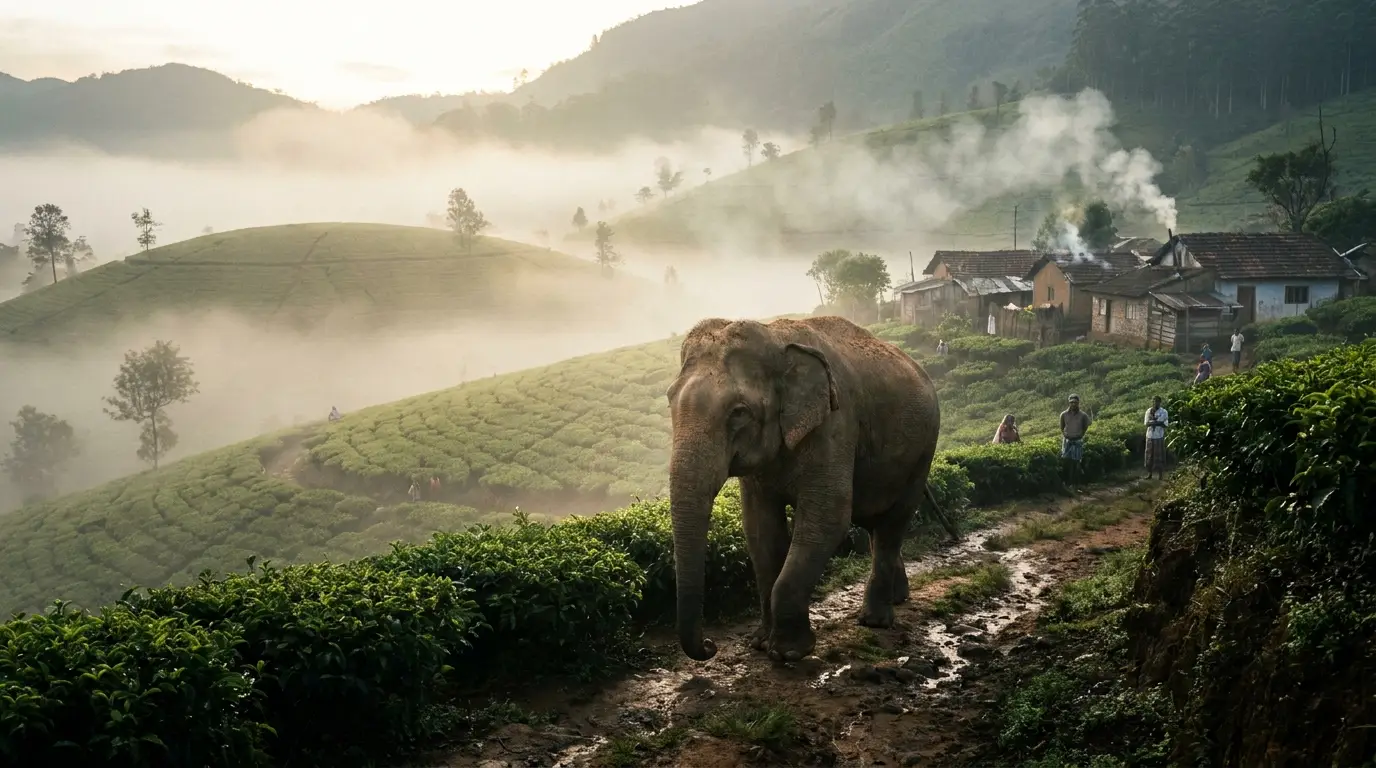
Wild elephants are one of the things that make Sri Lanka extraordinary. Seeing one crossing a road or moving through the landscape can be an unforgettable experience.

But there is another side to living alongside one of Asia’s largest remaining elephant populations.

Sri Lanka’s human-elephant conflict, usually shortened to HEC, has become a serious safety, conservation and land-use problem. Recent reporting has again raised concerns about the number of people and elephants being killed and about whether Sri Lanka needs to make much greater use of technology to prevent encounters before they become dangerous.

This is not simply a wildlife story.

For foreigners living in Sri Lanka, buying rural property, developing land, operating tourism businesses or travelling through elephant-range areas, human-elephant conflict is something worth understanding.

Research published in 2026 describes Sri Lanka as facing one of the world’s most serious human-elephant conflict situations. Since 2019, studies estimate an average of around 125 people and 370 elephants have died annually in conflict-related incidents.

The important point for expats is not to become frightened of elephants. Most foreigners living or travelling in Sri Lanka will never experience a dangerous encounter.

The point is to understand where the risks exist, why they exist and how they should influence decisions about travel, property and rural living.

Recent reporting by The Island has highlighted calls for Sri Lanka to make greater use of technology as human-elephant conflict continues to cause fatalities.

The argument is increasingly supported by research: traditional approaches alone have struggled to contain the problem.

Electric fencing has been one of Sri Lanka’s main tools for separating elephants from settlements and agricultural land. However, studies have found that fences can fail because of poor maintenance, unsuitable positioning or elephants learning how to bypass or damage them. In some cases, badly positioned fences may even obstruct elephant movement and shift the conflict elsewhere.

Sri Lanka has therefore been exploring more sophisticated approaches.

These include:

  • real-time elephant monitoring;
  • infrared detection systems;
  • AI-assisted identification;
  • drones;
  • satellite and GIS mapping;
  • mobile alerts;
  • early-warning systems for villages;
  • better mapping of elephant corridors and conflict hotspots.

This is not entirely new. A UN-supported early-warning project previously tested infrared sensors designed to detect elephants approaching villages and alert residents before the animals entered populated areas.

More recently, researchers have demonstrated how satellite imagery and GIS data can identify areas with particularly high human-elephant conflict risk.

The direction is becoming clearer: Sri Lanka’s response is gradually moving from simply reacting to elephants after they enter settlements towards predicting where dangerous encounters are likely to happen.

Daily life impact

For the majority of expats living in Colombo, central Colombo suburbs, established coastal towns or densely populated urban areas, human-elephant conflict is unlikely to affect everyday life.

The situation is very different in parts of rural Sri Lanka.

Elephant ranges extend well beyond national parks. A recent Sri Lankan government environmental framework estimates that roughly 70% of elephant range lies outside the Department of Wildlife Conservation’s protected-area network, while more than two-thirds of the country’s wild elephants may spend time outside protected areas.

That is an important distinction.

A property does not have to be next to a national park for elephants to move through the surrounding landscape.

For people living in affected areas, elephants can damage crops, gardens, fences, buildings and other property. Movement after dark can also become considerably more dangerous.

Foreign residents should therefore rely on local knowledge rather than simply looking at a map and assuming that distance from a national park means there are no elephants nearby.

Financial and property impact

This is where the issue becomes particularly relevant for foreign investors.

Human-elephant conflict should increasingly be considered part of environmental due diligence when buying or developing rural land.

Research has linked conflict closely with land-use change. One major study found that 98% of recorded human-elephant conflict incidents analysed occurred within one kilometre of areas experiencing recent land-cover change.

Development itself can therefore contribute to the problem.

Roads, agricultural projects, settlements and other infrastructure may fragment elephant habitat or interfere with traditional movement routes.

For a foreign property buyer, a beautiful undeveloped plot near forest or scrubland may therefore require more investigation than a standard title search and boundary survey.

Before purchasing rural land, ask:

Do elephants regularly pass through this area?

Is the land close to a known elephant corridor?

Have neighbouring properties experienced elephant damage?

Is there functioning elephant fencing nearby?

Where are the nearest forest, reservoir and protected areas?

Does the proposed development interfere with an established wildlife route?

These questions are particularly important for eco-resorts, villas, agricultural investments and large rural plots.


Tags: Business in Sri LankaDisaster RecoveryDoing Business in Sri LankaExpats in Sri LankaForeign EmploymentForeign InvestorsForeign RemittancesGlobal Compact for MigrationHuman Trafficking PreventionInvesting in Sri LankaLand Ownership Sri LankaLand ResettlementLiving in Sri LankaMigrant WorkersMigration PolicyMoving to Sri LankaOverseas EmploymentProperty Investment Sri LankaPublic Transport Sri LankaRoad Safety Sri LankaSri Lanka CabinetSri Lanka DevelopmentSri Lanka EconomySri Lanka GovernmentSri Lanka InfrastructureSri Lanka InvestmentSri Lanka MigrationSri Lanka NewsSri Lanka PolicySri Lanka PropertySri Lanka Real EstateSri Lanka TourismTransport RegulationsTravel to Sri LankaVehicle Inspections
Previous Post

Complete Guide to Driving in Sri Lanka as a Foreigner

Next Post

Sri Lanka secures $200m ADB loan to boost investment

ExpatsLanka Editorial Team

ExpatsLanka Editorial Team

Next Post
Sri Lanka secures $200m ADB loan to boost investment

Sri Lanka secures $200m ADB loan to boost investment

Leave a Reply Cancel reply

Your email address will not be published. Required fields are marked *

Stay Connected test

  • 24k Followers
  • 99 Subscribers
  • Trending
  • Comments
  • Latest
Sri Lanka Visa Information – General Guide

Sri Lanka Visa Information – General Guide

August 22, 2026
Sri Lanka wants to Welcome 5 Million Tourists a year by 2030

Sri Lanka wants to Welcome 5 Million Tourists a year by 2030

August 7, 2026
Sri Lanka’s Tourism Expansion: What expats need to know

Sri Lanka’s Tourism Expansion: What expats need to know

August 21, 2026
Travelling in Kurunegala? Uber has now arrived

Travelling in Kurunegala? Uber has now arrived

August 20, 2026
Sri Lanka’s Tourism Expansion: What expats need to know

Sri Lanka’s Tourism Expansion: What expats need to know

2
Sri Lanka Visa Information – General Guide

Sri Lanka Visa Information – General Guide

1
Sri Lanka wants to Welcome 5 Million Tourists a year by 2030

Sri Lanka wants to Welcome 5 Million Tourists a year by 2030

1
PickMe launches new tourism platform with Colombo Connect

PickMe launches new tourism platform with Colombo Connect

1
Sri Lanka Targets $9 Billion in Foreign reserves by end of 2026

Sri Lanka Targets $9 Billion in Foreign reserves by end of 2026

August 22, 2026
Sri Lanka has 400,000 Job Vacancies – But where are the workers?

Sri Lanka has 400,000 Job Vacancies – But where are the workers?

August 21, 2026
How development is reshaping Sri Lanka’s property market

How development is reshaping Sri Lanka’s property market

August 22, 2026
Sri Lanka News, Sri Lanka Government, Sri Lanka Cabinet, Sri Lanka Economy, Sri Lanka Policy, Sri Lanka Migration, Overseas Employment, Foreign Employment, Global Compact for Migration, Migration Policy, Human Trafficking Prevention, Migrant Workers, Foreign Remittances, Investing in Sri Lanka, Sri Lanka Investment, Doing Business in Sri Lanka, Foreign Investors, Business in Sri Lanka, Sri Lanka Development, Sri Lanka Infrastructure, Sri Lanka Property, Sri Lanka Real Estate, Land Ownership Sri Lanka, Property Investment Sri Lanka, Disaster Recovery, Land Resettlement, Road Safety Sri Lanka, Vehicle Inspections, Public Transport Sri Lanka, Transport Regulations, Living in Sri Lanka, Moving to Sri Lanka, Expats in Sri Lanka, Sri Lanka Tourism, Travel to Sri Lanka, investing in Sri Lanka, Sri Lanka economy for expats, Sri Lanka foreign investment, Sri Lanka property market, Sri Lanka cost of living, Sri Lanka economic growth

Sri Lanka’s Economy in 2026: What expats should know

August 21, 2026

Recent News

Sri Lanka Targets $9 Billion in Foreign reserves by end of 2026

Sri Lanka Targets $9 Billion in Foreign reserves by end of 2026

August 22, 2026
Sri Lanka has 400,000 Job Vacancies – But where are the workers?

Sri Lanka has 400,000 Job Vacancies – But where are the workers?

August 21, 2026
How development is reshaping Sri Lanka’s property market

How development is reshaping Sri Lanka’s property market

August 22, 2026
Sri Lanka News, Sri Lanka Government, Sri Lanka Cabinet, Sri Lanka Economy, Sri Lanka Policy, Sri Lanka Migration, Overseas Employment, Foreign Employment, Global Compact for Migration, Migration Policy, Human Trafficking Prevention, Migrant Workers, Foreign Remittances, Investing in Sri Lanka, Sri Lanka Investment, Doing Business in Sri Lanka, Foreign Investors, Business in Sri Lanka, Sri Lanka Development, Sri Lanka Infrastructure, Sri Lanka Property, Sri Lanka Real Estate, Land Ownership Sri Lanka, Property Investment Sri Lanka, Disaster Recovery, Land Resettlement, Road Safety Sri Lanka, Vehicle Inspections, Public Transport Sri Lanka, Transport Regulations, Living in Sri Lanka, Moving to Sri Lanka, Expats in Sri Lanka, Sri Lanka Tourism, Travel to Sri Lanka, investing in Sri Lanka, Sri Lanka economy for expats, Sri Lanka foreign investment, Sri Lanka property market, Sri Lanka cost of living, Sri Lanka economic growth

Sri Lanka’s Economy in 2026: What expats should know

August 21, 2026
ExpatsLanka | The complete guide for expats living in Sri Lanka

Expats Lanka is your trusted guide to living in Sri Lanka, offering news, visa updates, lifestyle tips, and recommendations for expats, digital nomads, and long-term international residents.

Follow Us

Recent News

Sri Lanka Targets $9 Billion in Foreign reserves by end of 2026

Sri Lanka Targets $9 Billion in Foreign reserves by end of 2026

August 22, 2026
Sri Lanka has 400,000 Job Vacancies – But where are the workers?

Sri Lanka has 400,000 Job Vacancies – But where are the workers?

August 21, 2026
  • About Us
  • Advertise
  • Contact
  • Home
  • Travel

© 2026 ExpatsLanka | All rights reserved.

No Result
View All Result
  • About Us
  • Advertise
  • Contact
  • Home
  • Travel

© 2026 ExpatsLanka | All rights reserved.