


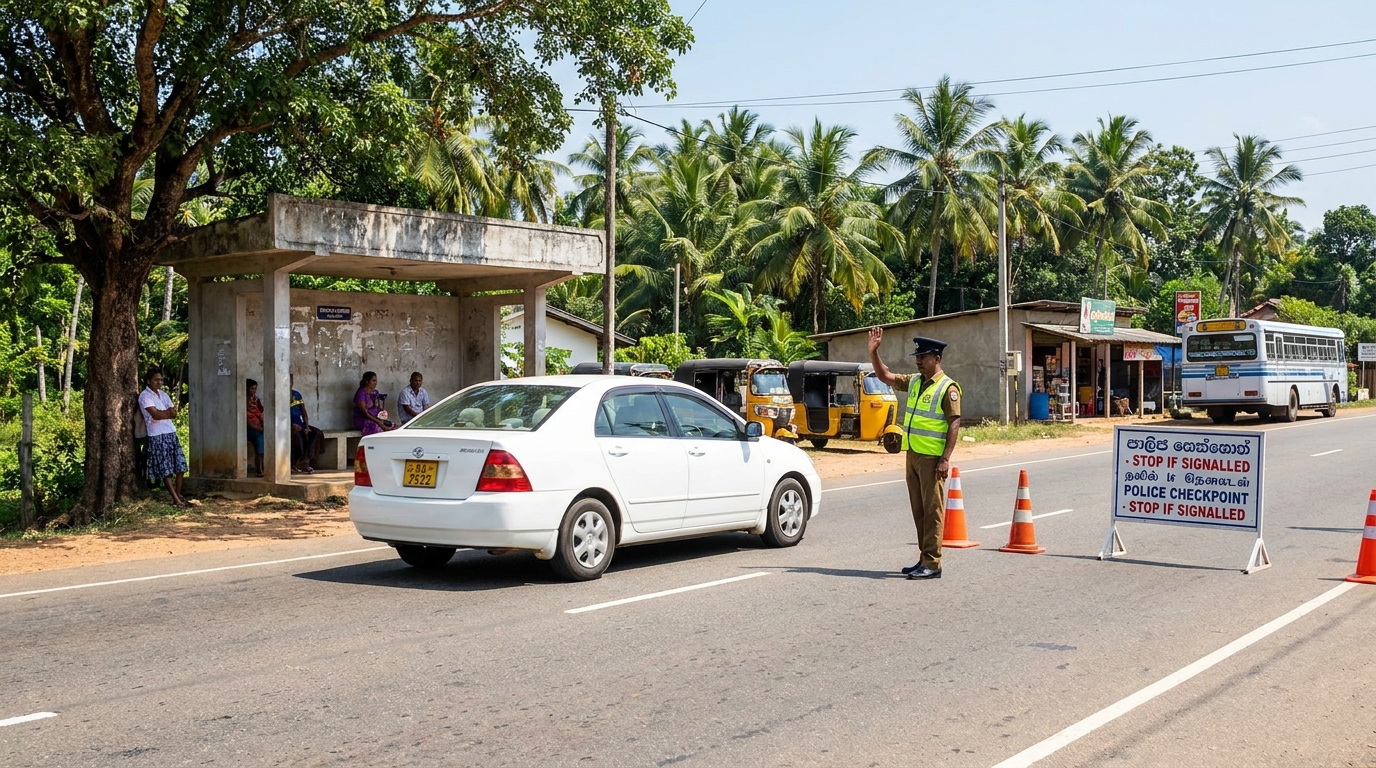
If you drive, ride a scooter, or hire a tuk-tuk in Sri Lanka, you will eventually be waved down at a police checkpoint. For most expats, that moment is a small but nerve-racking piece of daily life — you’re not always sure what’s expected of you, whether cash should ever change hands, or how to tell a routine check from something more serious.

This week, Sri Lanka Police has publicly addressed exactly that discomfort. A senior traffic officer has instructed police nationwide to carry out vehicle checks more transparently, in visible locations, and without any suggestion that money should be handed over at the roadside. The instruction follows a viral video of a father and daughter being stopped near Wariyapola in the early hours of the morning by officers displaying firearms, an incident that struck a nerve with the Sri Lankan public and is equally relevant to anyone living here as a foreigner.
For expats, this story matters for a simple reason: it’s an official, on-the-record statement of how traffic stops are supposed to work in Sri Lanka. That’s genuinely useful, because most foreign residents have never seen the rules written down anywhere — they’ve only picked up fragments from friends, drivers, or their own roadside experiences.
According to Deputy Inspector General (DIG) W.P.J. Senadheera, who heads the Traffic and Road Safety Range of Sri Lanka Police, officers have been directed to:
- Conduct vehicle stops in visible public locations — such as bus stops — rather than hiding behind bushes or in isolated spots.
- Avoid arbitrary stops or any conduct that could be read as soliciting money.
- Clearly identify themselves and their purpose when intercepting a vehicle, whether by stopping it directly or following it.
Crucially, the directive restates a point that is often misunderstood by residents and visitors alike: motorists are not required to pay police officers directly at the roadside. Traffic fines in Sri Lanka must be paid through official channels — such as post offices — and any on-the-spot cash payment outside that system risks breaching the Bribery Act, for the officer and the driver who offers it.
The trigger for this statement was a video that circulated on social media on 8 August 2026, showing a man on a motorcycle, travelling with his young daughter from Kurunegala towards Padeniya at around 1 a.m., being stopped near Wariyapola by a group of officers displaying a firearm. The rider, who said he was travelling at a modest 45–50 km/h and was already slowing down, described how frightened his daughter was by the sight of the weapon, and publicly questioned whether this was normal or legally permitted procedure. Separately, an unrelated case involving an officer from the Dambulla Highway Unit — accused of accepting a bribe — is now under investigation, with the officer suspended from traffic duties and transferred pending disciplinary and legal proceedings.
There is no new law here, and no new fine structure. This is a reaffirmation of existing conduct standards, prompted by public pressure after two separate incidents raised questions about how checks are being carried out on the ground.
What does this mean for foreigners?
Daily life impact
For most expats, day-to-day driving habits shouldn’t need to change at all. You are not more or less likely to be stopped as a result of this announcement. What should change, gently, is your confidence at a checkpoint: you now have an official basis for expecting officers to identify themselves clearly, stop you somewhere visible, and not ask for cash in hand. If a stop feels inconsistent with that — for example, an isolated location late at night with no clear explanation — it’s reasonable to feel that something is off, and to note details (location, time, officer number if visible) for your own records.
Financial impact
There’s no change to fine amounts, vehicle taxes, or import duties as a result of this directive (note: a separate, unrelated story this week confirms the 50% surcharge on vehicle import tax has been extended to 31 December, which is worth knowing if you’re planning to import or buy a vehicle). What matters financially here is procedural: fines should be paid through authorised channels such as post offices, not handed to an officer at the roadside. Paying cash directly to avoid a fine, even if an officer suggests it, exposes you to a bribery allegation — a far more serious problem for a foreign resident than the original traffic offence.
Visa and residency impact
This directive has no bearing on visas, residency permits, or immigration status. It is purely a traffic-policing conduct matter. However, it’s a useful reminder that any conviction involving corruption or bribery — even a minor roadside payment — can complicate future visa extensions, residency applications, or Certificates of Good Conduct that some expats need for employment or long-term residency elsewhere. Keeping your record entirely clean of even informal “facilitation payments” is good practice for exactly this reason.
Travel impact
Tourists and short-term visitors driving on Sri Lankan roads, including those on hired motorcycles or self-drive rentals are covered by the same rules. Late-night travel on rural roads, such as the Kurunegala–Padeniya route in the source incident, is common among tourists heading to sites like Sigiriya, Dambulla, or Anuradhapura before sunrise. Being stopped at a checkpoint at night is not unusual and is not, by itself, cause for alarm; this directive is about how that stop is conducted, not about discouraging travel.
What should expats do now?
Carry your documents at all times. International Driving Permit (IDP) or Sri Lankan driving licence, passport or a clear copy, vehicle registration (or rental agreement), and insurance documents.
Never hand cash directly to an officer, even if it’s suggested as a “quicker” option. Politely ask how the fine should be paid, or ask for a receipt or reference number.
Stay calm and stop promptly wherever it is safe to do so. Sudden braking or swerving out of fright is a genuine safety risk, which is part of why this directive was issued.
Note the details of any stop that feels irregular: location, approximate time, and any identifying information — in case you need to raise a concern later.
Know where to complain if needed. Sri Lanka Police has a Public Complaints procedure, and expats can also raise serious concerns through their embassy or high commission if they feel unsafe or improperly treated.
Tips
- Keep digital and physical copies of your licence, passport photo page, and vehicle documents — a phone photo saves time if the originals aren’t on you.
- Learn a few key phrases in Sinhala or Tamil (“license eka” for licence, for example) — a small effort that often smooths a roadside interaction.
- If asked for money directly, ask calmly for a formal receipt or the correct payment location instead of paying on the spot.
- Avoid unnecessary night driving on unfamiliar rural roads where possible, simply for general road safety, not because of policing.
- Follow official Sri Lanka Police updates and reputable local news for any formal guidelines that may follow this directive.
Frequently Asked Questions
Does this affect foreign residents and tourists driving in Sri Lanka? Yes — the conduct standards apply to any vehicle stop, regardless of the driver’s nationality or visa status.
Do I have to pay a traffic fine in cash to the police officer at the roadside? No. Fines are meant to be paid through official channels such as post offices, not handed directly to an officer.
What should I do if a police officer asks me for cash directly? Politely decline, ask for the correct official payment procedure or a receipt, and note the details of the encounter in case you need to report it later.
Is it normal for police to display firearms during a routine traffic stop? This was precisely the public’s question after the Wariyapola incident, and it’s now under scrutiny at a senior police level; expats should not assume it is standard for a minor traffic offence.
Could this affect my visa or residency status? No, this directive is unrelated to immigration processes. However, any bribery-related conviction could complicate future visa or residency matters, so it’s worth avoiding informal roadside payments altogether.
Where can expats get official information or report a concern? Sri Lanka Police’s public complaints channels, and your embassy or high commission for more serious concerns, are the appropriate routes.