

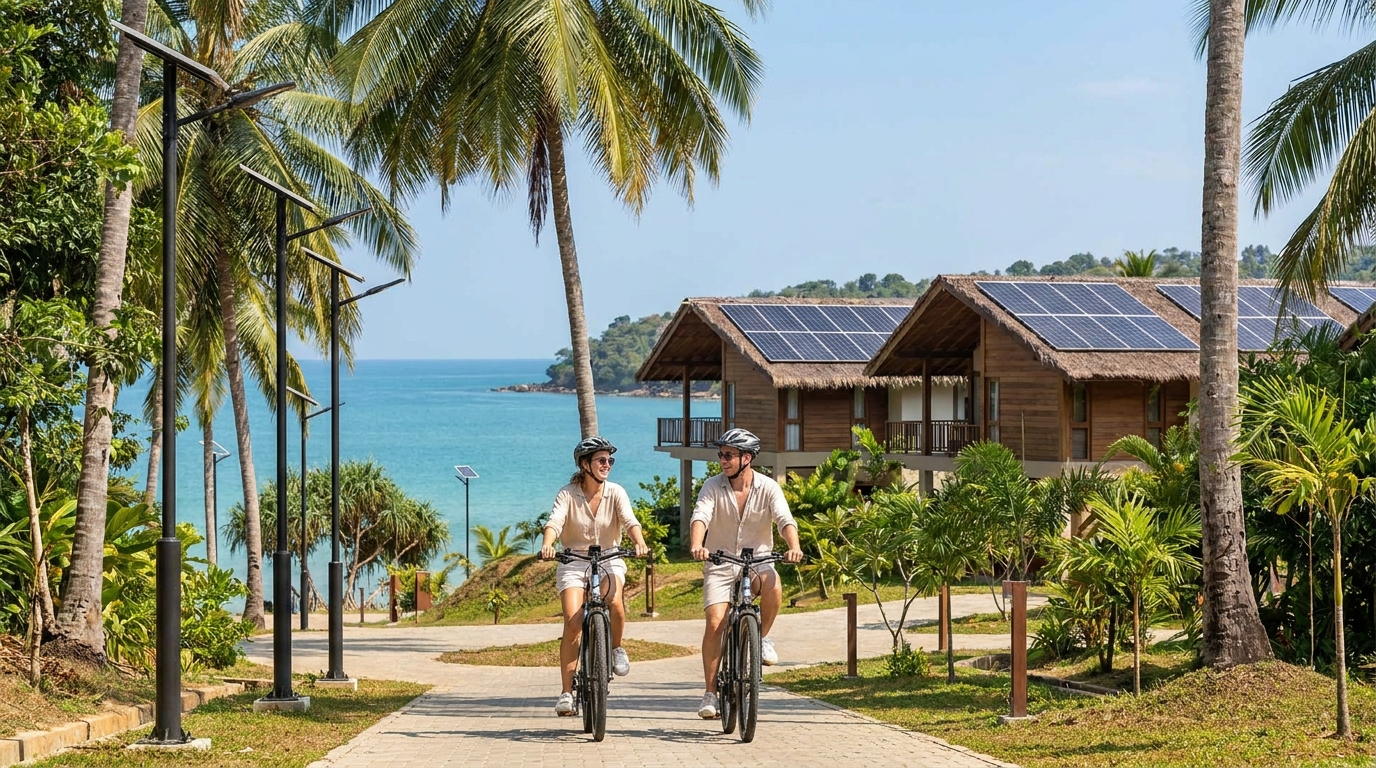
Sri Lanka has announced plans to transform Delft Island into the country’s first zero-emission eco-tourism destination, marking another step in its broader strategy to develop sustainable tourism and renewable energy across the island’s northern islands. The initiative builds on existing government plans to develop Delft, Nainativu and Analaitivu as “Green Energy Islands” powered by hybrid renewable energy systems.

For most visitors, this may sound like another tourism announcement.
For expats, however, it signals something much bigger.
Sri Lanka wants to Welcome 5 milion tourists
The project reflects the direction Sri Lanka is taking towards higher-value tourism, greener infrastructure and greater international investment in environmentally sustainable developments. While Delft Island is a remote destination, policies introduced there could eventually influence tourism, transport and infrastructure projects across other parts of Sri Lanka.
The Delft Island project is unlikely to have a direct impact on the cost of living, taxes or exchange rates. Its financial significance lies in its potential to strengthen Sri Lanka’s reputation as a sustainable tourism destination, attracting travellers who are increasingly seeking environmentally responsible experiences. A stronger tourism sector can encourage further investment in hospitality, transport and supporting industries, helping to create new business opportunities across the country.
For foreign investors and property owners, the announcement reinforces an important trend rather than creating an immediate investment opportunity on Delft Island itself. As Sri Lanka continues to promote eco-tourism and sustainable development, demand may grow for boutique hotels, eco-lodges, wellness retreats and businesses that support responsible travel. Investors who understand these changing market preferences may be better positioned to benefit from the country’s evolving tourism industry over the coming years.