


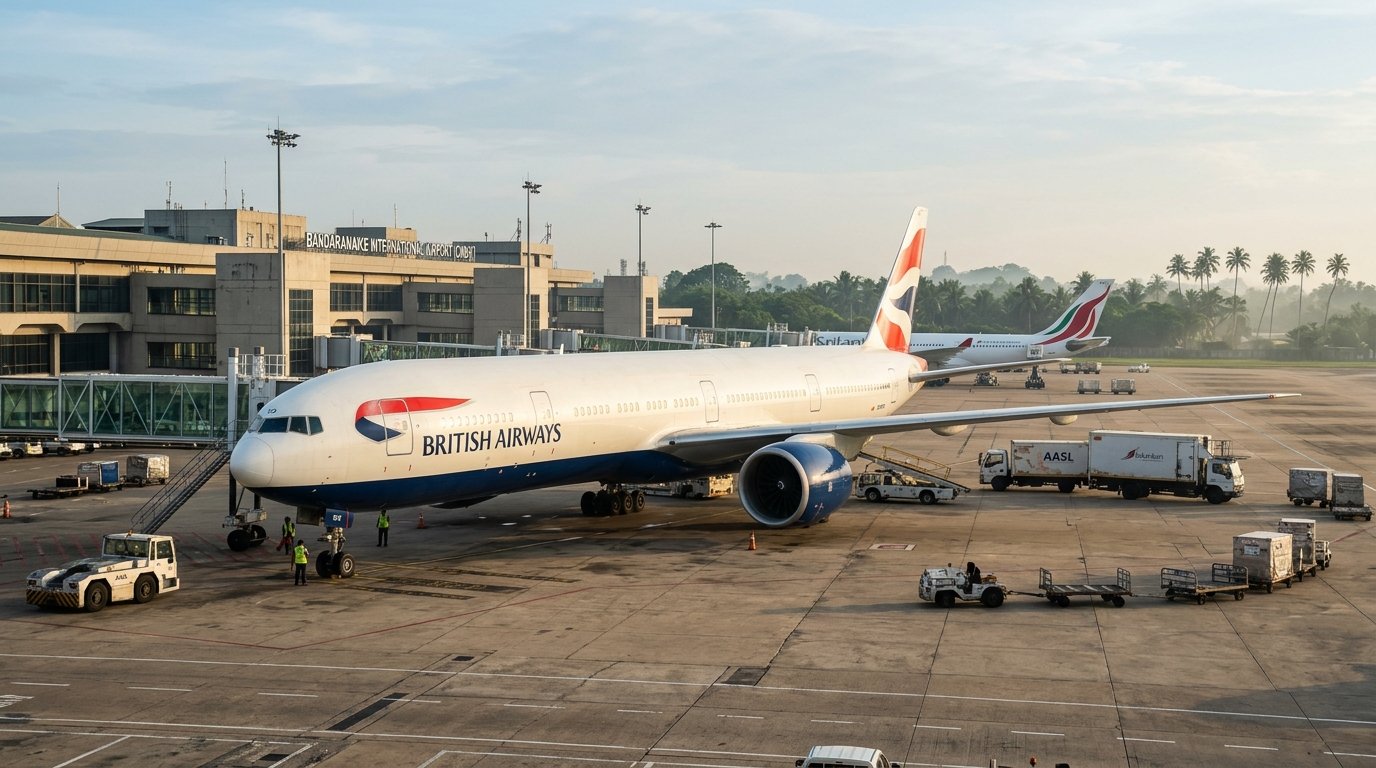
British Airways Returns to Sri Lanka: Why It Matters
British Airways has resumed flights to Sri Lanka after more than a decade, introducing a new non-stop connection between London Gatwick and Colombo. Announced in March 2026 as part of the airline’s winter long-haul network expansion, the service officially launched on 23 October, with the first flight arriving at Bandaranaike International Airport the following morning.

Operating three times a week during the winter season, the route uses Boeing 777 aircraft and offers three cabin classes: World Traveller (economy), World Traveller Plus (premium economy) and Club World (business class).
For tourists, the new service provides an additional way to reach Sri Lanka without changing aircraft. However, its significance extends beyond holiday travel. For foreign residents, business owners, retirees and property investors who regularly travel between Sri Lanka and Europe, improved air connectivity can make it easier to maintain family commitments, manage businesses and properties, and divide their time between countries.
The return of British Airways could also have wider economic benefits. Additional international flight capacity may encourage tourism growth, increase competition between airlines and create opportunities for local businesses, particularly in hospitality, transport and holiday rentals. For foreign property owners, stronger connections with the UK market could support demand for short-term accommodation, although any impact on rental income will depend on actual visitor numbers and local market conditions.
While the development is a positive step for Sri Lanka’s international connectivity, the seasonal schedule and limited weekly departures mean travellers will still need to plan carefully. Nevertheless, the route offers greater choice and reflects renewed airline interest in Sri Lanka as a long-haul destination.
ExpatsLanka Analysis: What does this mean for foreigners?
1. More flexibility for British expats and long-term residents
For British nationals living in Sri Lanka, particularly those who divide their time between the two countries, the additional service is a welcome development.
A non-stop journey eliminates the need to connect through hubs such as Doha, Dubai or Abu Dhabi.
This can be particularly useful for families travelling with young children, elderly passengers and anyone carrying additional luggage for an extended stay.
It also creates another option for people who need to return to Britain for family commitments, business or healthcare.
However, three weekly services do not offer the flexibility of a daily route. Travellers with fixed appointment dates or urgent travel requirements should maintain alternative options.
2. Will flights to Sri Lanka become cheaper?
Additional airline capacity can increase competition, but lower fares are not guaranteed.
British Airways’ October promotional material advertised return fares starting from £524, including taxes and carrier fees. This was a starting fare, not a fixed price available on every departure.
British Airways Media Centre
Prices will still depend on travel dates, booking demand, baggage requirements and cabin availability.
The strongest price pressure may occur on dates when airlines compete directly for passengers. Christmas, New Year and popular winter holiday periods may remain expensive.
For residents travelling between Sri Lanka and Britain regularly, comparing total journey costs is more useful than comparing advertised ticket prices alone.
3. Benefits for European, American and Australian expats
Although the service connects Sri Lanka specifically with Britain, it may also benefit travellers from other countries.
European passengers could combine a flight to Gatwick with the onward non-stop service to Colombo.
American residents visiting Sri Lanka may find London useful as an alternative connection point, depending on their departure city and available through-ticket arrangements.
For Australians, however, routing through London would generally be a substantial detour. Connections through Asian or Middle Eastern hubs are likely to remain more practical.
One important consideration is that British Airways uses Gatwick for its Colombo service. Travellers connecting through Heathrow may need to transfer between London’s airports, potentially adding significant time and expense.
A non-stop Gatwick–Colombo sector does not necessarily mean a convenient end-to-end journey.
4. Potential impact on tourism and rental properties
The return of a major international airline creates opportunities for Sri Lanka’s tourism industry.
More direct connections could make the island attractive to travellers who prefer to avoid lengthy transfers.
This may particularly benefit tourism-dependent businesses, including boutique hotels, villas, restaurants, transport providers and holiday rental operators.
For foreign property owners, especially those operating accommodation along the southern and western coasts, improved connectivity could help increase exposure to the British market.
However, property investors should distinguish between increased accessibility and guaranteed rental demand.
A new air route alone does not establish higher occupancy, stronger rental yields or property price growth.
These depend on location, seasonality, property quality, management costs and actual visitor demand.
Sri Lanka’s Economy in 2026: What Expats Should Know
What should expats do now?
Foreign residents planning international journeys should compare British Airways with existing airlines before booking.
Check the complete itinerary, including airport transfers, baggage allowances, ticket flexibility and cancellation conditions.
Families travelling with children should also review seating arrangements, child fares and any requirements for infants or pushchairs.
Anyone returning to Sri Lanka should ensure their passport, visa or residence permit will remain valid for re-entry. Carry copies of immigration approvals and relevant supporting documents.
Useful official resources include:
- British Airways for reservations and flight updates.
- Sri Lanka ETA for visitor travel authorisation.
- Department of Immigration and Emigration for residence and visa information.
- UK Foreign Travel Advice for British travellers.
ExpatsLanka Tips
1. Compare both London airports. Gatwick may be convenient for some passengers, but Heathrow could offer better onward connections for others.
2. Check the entire journey cost. Include baggage, transport between airports, seat selection and ticket changes before choosing a fare.
3. Plan around seasonal availability. Do not assume British Airways will operate this route throughout the year.
4. Verify immigration documents. Confirm your visa, residence permit and re-entry conditions before leaving Sri Lanka.
5. Monitor tourism demand before investing. Property owners should examine actual occupancy rates and rental revenue rather than relying on airline announcements as evidence of investment returns.
How development is reshaping Sri Lanka’s property market
Frequently Asked Questions
1. Does British Airways fly directly to Sri Lanka in 2026?
Yes. British Airways resumed non-stop flights between London Gatwick and Colombo on 23 October 2026, with the first service arriving in Sri Lanka on 24 October.
2. How many British Airways flights to Colombo operate each week?
The airline has scheduled three weekly services during the winter season. Passengers should verify specific operating days when booking.
3. How much do British Airways flights to Sri Lanka cost?
British Airways advertised return fares starting from £524 in October 2026. Actual prices depend on dates, demand, cabin selection and availability.
4. Will British Airways operate flights to Sri Lanka all year?
Not under its announced schedule. The new service is seasonal, operating during the winter period. Year-round operations have not been confirmed.
Sri Lanka Visa Information – General Guide
The return of British Airways to Sri Lanka represents a positive step in strengthening the island’s international connectivity.
For British expats, seasonal residents and families travelling between countries, it offers greater choice and the convenience of another non-stop connection.
For tourism operators and foreign property owners, it may create additional opportunities to reach the British travel market.
However, the benefits should be assessed realistically. Three weekly seasonal flights are an improvement in accessibility, not evidence of permanent year-round capacity or guaranteed economic growth.
At ExpatsLanka, we will continue monitoring aviation developments, immigration regulations, economic changes and property-related news to explain what they mean for foreigners living in Sri Lanka.
Follow ExpatsLanka.com for practical updates and independent analysis to help you make informed decisions about living, travelling and investing in Sri Lanka.