

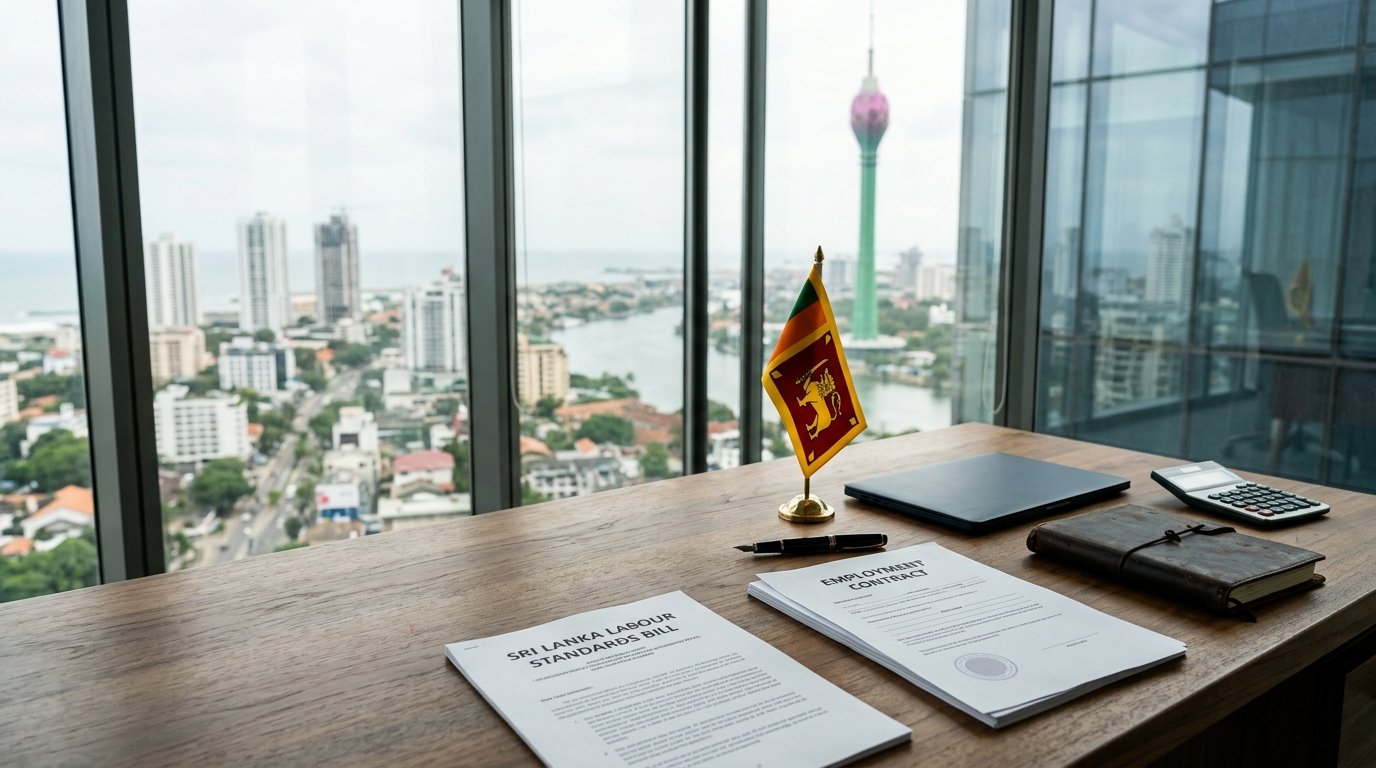
Sri Lanka is preparing a significant overhaul of its employment legislation, with proposed reforms covering working hours, overtime, employment contracts, maternity and paternity leave, workplace safety and employee rights.

The government has launched public consultations on the proposed Labour Standards Bill, marking an important step towards modernising the country’s employment regulations and adapting them to the changing needs of businesses and employees.
For expats employing local staff, foreign entrepreneurs operating businesses in Sri Lanka and international investors considering entering the market, these reforms could have significant implications for employment practices, operating costs and legal responsibilities.
However, the proposals are still under development and have not yet become law.
Can a Foreigner Start a Business in Sri Lanka?
Why is Sri Lanka reforming its labour laws?
Sri Lanka’s existing employment legislation consists of several laws governing different aspects of employment and workplace conditions. Depending on their industry and employment arrangements, businesses may be subject to different regulatory requirements.
The government intends to modernise and consolidate major elements of the existing legislation into a more coherent legal framework.
During a parliamentary meeting on 18 November 2026, Ministry of Labour officials outlined four main areas of reform:
- Labour standards and employment conditions.
- Occupational health and workplace safety.
- Industrial relations and employment disputes.
- Trade union rights.
The proposed legislation is being developed by an expert committee appointed with Cabinet approval, with input expected from employers, trade unions and employee representatives.
What changes are being proposed?
Employment contracts
The proposed reforms address the formalisation of employment contracts.
For foreign business owners, this could mean greater attention to written employment agreements, employee responsibilities, remuneration, working arrangements and employment records.
Smaller businesses that rely heavily on informal employment arrangements may need to review their practices if additional requirements are introduced.
Working hours and overtime
Working hours, rest periods, leave entitlements and overtime arrangements are among the areas under review.
Any future changes could directly affect businesses operating outside conventional office hours, particularly restaurants, hotels, retail outlets, tourist accommodation and transport services.
Employers may eventually need to reconsider shift patterns, staffing levels and overtime budgets, depending on the final legislation.
Maternity and paternity leave
The proposed framework includes maternity protection and provisions concerning paternity leave.
For businesses employing staff in Sri Lanka, potential changes could influence workforce planning, temporary staff recruitment and employee benefits.
The duration of any new leave entitlements and the associated financial responsibilities should not be assumed until the final provisions are confirmed.
Part-time employment and social security
The reforms also address the rights of part-time workers and employee social security benefits.
This is particularly relevant to businesses that experience seasonal fluctuations in demand, such as hotels, restaurants, tourism operators and holiday rental companies.
Foreign entrepreneurs using flexible employment arrangements should monitor whether the final legislation introduces additional protections, contributions or administrative obligations.
Workplace safety and employee protection
The proposed framework includes measures concerning occupational safety, workplace violence and harassment.
Depending on the final requirements, businesses may need to introduce or update workplace policies, employee complaint procedures, staff training and health and safety practices.
These measures could be relevant to businesses of different sizes, not just large corporations.
How could the labour law reforms affect foreign businesses in Sri Lanka?
Foreign entrepreneurs establishing businesses in Sri Lanka sometimes underestimate the complexity of employing staff locally.
Employment costs extend beyond basic salaries. Employers must also consider statutory contributions, overtime, paid leave, public holidays and other applicable employment obligations.
If the proposed legislation introduces new requirements, businesses may need to adjust their financial forecasts and employment policies.
The sectors potentially affected include:
- Hotels, villas and holiday accommodation.
- Restaurants, cafés and beach clubs.
- Property management companies.
- International schools and childcare providers.
- Retail and manufacturing businesses.
- IT companies and professional service providers.
- Tourism and travel agencies.
For example, a foreign investor purchasing a villa with the intention of operating it as a holiday rental business may need to budget for more than the monthly salaries of a caretaker, housekeeper and gardener.
Future changes to working hours, leave entitlements or social security obligations could influence the property’s operating costs and overall investment returns.
What could the reforms mean for expats employing domestic staff?
Many foreigners living in Sri Lanka employ household staff, including nannies, housekeepers, gardeners, drivers and caretakers.
Although much of the discussion surrounding labour reform focuses on commercial employment, expats employing domestic staff should also follow developments.
Domestic employment can be subject to different legal provisions from conventional commercial employment. It is therefore important to establish whether and how the new legislation will apply to household workers before drawing conclusions.
Regardless of the proposed reforms, expats should consider establishing clear employment arrangements covering salaries, working hours, holidays, duties and termination conditions.
Written agreements can help prevent misunderstandings and provide greater clarity for both parties.
Could the reforms make Sri Lanka more attractive to foreign investors?
A clearer and more consistent employment framework could make it easier for international investors to understand their obligations before establishing a business in Sri Lanka.
Predictable employment regulations can support financial planning, reduce uncertainty and improve confidence in the local business environment.
Stronger employee protections could also contribute to staff retention, workplace stability and more professional employment relationships.
However, the economic impact will depend on the final legislation. Additional employment obligations could increase costs for some businesses, particularly small enterprises and labour-intensive industries.
The challenge will be to balance employee protection with the operational needs of businesses, including smaller companies that may have limited financial and administrative resources.
Specific proposals foreign employers should monitor
Further details published by the Ministry of Labour on 29 October 2026 provide an indication of the potential direction of the reforms.
| Employment area | Proposed provisions |
|---|---|
| Employment contracts | Written agreements in a language understood by the employee |
| Annual leave | 14 days of annual leave |
| Weekly rest | One and a half days |
| Maternity leave | 84 paid working days following a live birth |
| Paternity leave | Five days of paid leave |
| Adoption | Introduction of leave entitlements |
| Part-time employees | Protection of EPF and ETF entitlements |
| Workplace harassment | Written prevention policies and internal complaint mechanisms for businesses employing 15 or more workers |
| Recruitment | Equal employment opportunities and restrictions on retaining employees’ original personal and educational certificates |
These proposals remain subject to consultation and revision. Some reflect existing employment protections, while others seek to extend or standardise entitlements across different employment categories.
Public consultation on the proposed labour laws
The first four completed chapters of the proposed Labour Standards Bill have been published on the Ministry of Labour website.
Employers, employees, trade unions and other stakeholders have been invited to contribute recommendations. Regional consultations are also intended to allow businesses and employees outside Colombo to participate in the reform process.
Foreign business owners can follow developments through the Ministry of Labour and its official announcements.
What should foreign employers do now?
There is no need to implement the proposed provisions before they become law. However, foreign entrepreneurs can use this period to review their existing employment practices and prepare for potential changes.
Business owners should consider:
- Reviewing existing employment contracts.
- Checking current compliance with EPF and ETF obligations.
- Reviewing overtime payments and working arrangements.
- Maintaining accurate payroll and employment records.
- Reviewing workplace safety and employee protection policies.
- Allowing for potential changes in employment costs when preparing budgets for 2027.
- Following official announcements regarding the progress of the legislation.
Anyone planning to establish a business in Sri Lanka in 2027 should also consider the possibility of regulatory changes when developing their business plan.
Looking ahead
Sri Lanka’s proposed labour law reforms could represent an important development in the country’s business environment.
For foreign entrepreneurs, the final legislation could bring greater clarity to employment requirements while introducing additional responsibilities. For employees, it could strengthen workplace protections and provide greater consistency in employment conditions.
As Sri Lanka continues to attract international investment, modernising its employment framework could play an important role in developing a more predictable, competitive and sustainable business environment.
ExpatsLanka will continue to follow the proposed reforms and report on developments relevant to foreign residents, employers and investors.
Sources
- Parliament of Sri Lanka – Proposed labour law reforms
- Ministry of Labour – Details of proposed employment reforms
- Government News Portal – Public consultations on proposed labour law reforms
Disclaimer: This article is intended for general informational purposes only and does not constitute legal, financial or employment advice. The labour law reforms discussed are proposed legislative changes and remain subject to consultation, amendment and formal approval. Foreign residents, employers and investors should verify current employment obligations with the relevant Sri Lankan authorities and seek qualified professional advice before making business or employment decisions.