


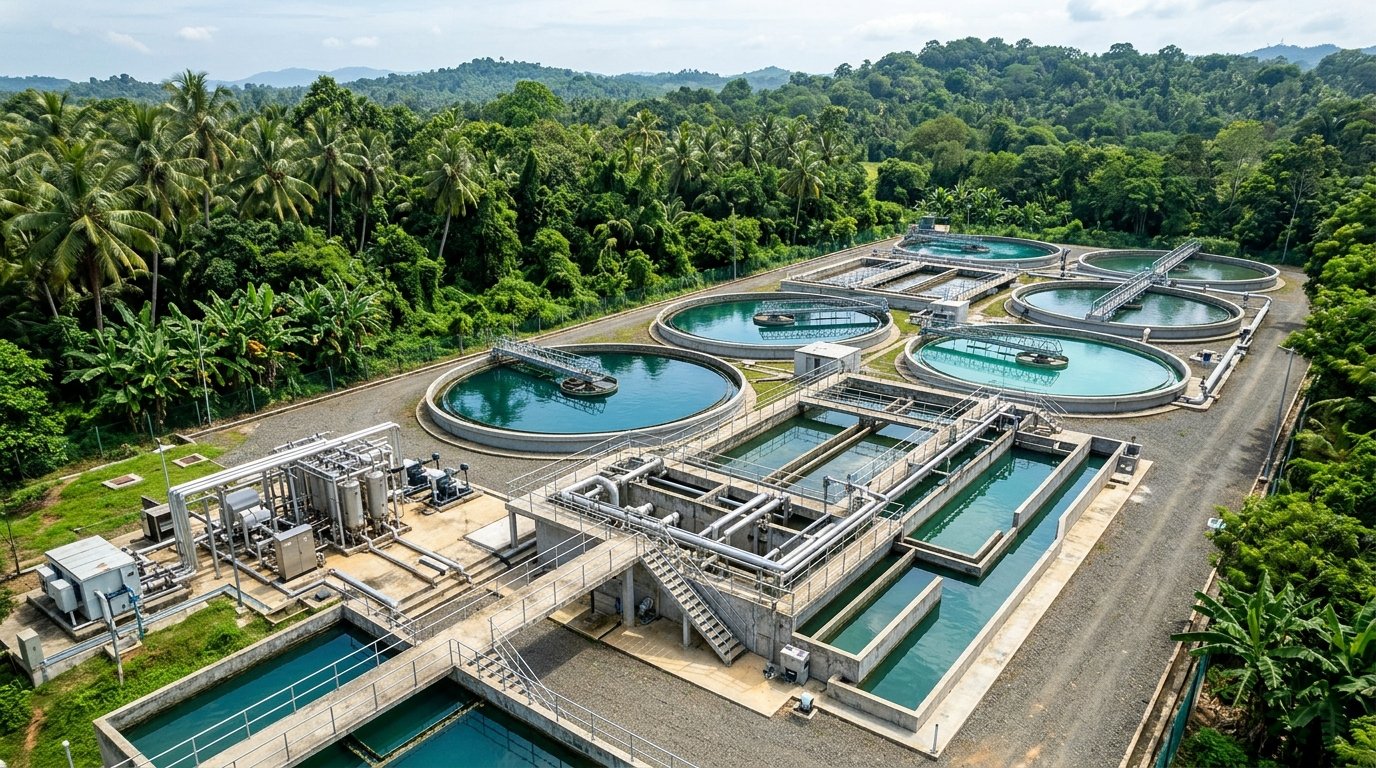
Planning to open a manufacturing business, workshop or another commercial operation in Sri Lanka? Depending on your activities, you may need an Environmental Protection Licence (EPL) before starting operations. This guide explains who needs one, where to apply, which documents to prepare, the application process, fees, inspections and renewal requirements.

ExpatsLanka | Business & Investment | Updated November 2026
Starting a business in Sri Lanka involves more than registering a company and finding suitable premises. Certain commercial and industrial activities must also obtain environmental approval before they can legally operate.
This is where the Environmental Protection Licence (EPL) becomes important.
For foreign entrepreneurs, understanding the requirement early can prevent unexpected expenses, delays and problems with local authorities.
Imagine investing in a small food-processing factory, buying machinery and signing a long-term lease, only to discover that the business cannot begin production until appropriate wastewater treatment arrangements have been installed.
The cost of meeting those requirements could be considerably higher than the licence fee itself.
An EPL is designed to regulate the environmental impact of specified businesses, particularly in relation to wastewater, air pollution, waste disposal, noise and vibration.
However, not every business needs one.
The important question is whether your planned commercial activity falls within Sri Lanka’s legally prescribed categories.
Here is how to find out and what to do if an Environmental Protection Licence is required.
1. What Is an Environmental Protection Licence in Sri Lanka?
An Environmental Protection Licence is an official authorisation issued under Sri Lanka’s National Environmental Act No. 47 of 1980, as amended.
It allows a business to carry out a prescribed activity subject to environmental conditions and applicable pollution-control standards.
The system is administered principally by the Central Environmental Authority (CEA), with certain responsibilities delegated to local government authorities.
The licence aims to control the environmental effects of activities that may generate:
- Industrial wastewater or other liquid waste.
- Air emissions, fumes or dust.
- Noise and vibration.
- Solid waste and other pollutants.
- Environmental contamination associated with commercial processes.
An EPL does not give a business unrestricted permission to pollute. Instead, it establishes conditions under which the business must operate.
Section 23A of the National Environmental Act requires prescribed activities to be carried out under a valid EPL and in accordance with applicable environmental standards.
2. Which Businesses Need an Environmental Protection Licence?
The requirement depends on the nature and scale of the business activity.
Sri Lanka identifies activities requiring an EPL through official Gazette notifications.
The principal national list is contained in Gazette Extraordinary No. 2264/18, dated 27 January 2022.
It divides prescribed activities into four categories according to their potential environmental impact.
The classification system published by the CEA
| Category | General pollution potential | Number of prescribed activities |
|---|---|---|
| A | Significantly high | 33 |
| B | High | 71 |
| C | Medium | 56 |
| D | Lower | 39 |
cea.lk
Examples of businesses that may fall within the environmental licensing system include certain manufacturing facilities, food-processing operations, vehicle service and repair facilities, industrial laundries, chemical-related activities and waste-processing operations.
But the classification is not based solely on the business’s name.
An activity’s production capacity, equipment, processes, waste generation and other technical factors may determine whether it falls within a prescribed category.
Does a restaurant or guesthouse need an EPL?
Not automatically.
A small restaurant or guesthouse may have local trade licensing, sanitation and wastewater obligations without necessarily falling into a prescribed EPL category.
However, larger facilities or operations involving particular processes and capacities may require further environmental assessment.
For example, an accommodation business operating a substantial wastewater treatment facility may have different obligations from a small guesthouse.
The relevant authority should confirm whether the specific operation requires an EPL.
What about an office or online business?
An ordinary office-based consultancy or online service company will not usually need an EPL solely because it conducts business in Sri Lanka.
Environmental licensing is concerned with legally prescribed activities, rather than all incorporated companies.
Before applying, check whether your exact business activity appears in the prescribed list.
You can review the CEA’s Environmental Protection Licensing Guidelines.
3. Where Do You Apply for an Environmental Protection Licence?
The responsible authority depends mainly on the activity’s EPL category and regulatory jurisdiction.
For most non-BOI businesses under the national CEA system, the arrangements are:
| EPL category | Where to apply |
|---|---|
| A | CEA provincial or district office |
| B | CEA provincial or district office |
| C | CEA provincial or district office |
| D | Relevant Municipal Council, Urban Council or Pradeshiya Sabha |
Businesses registered under applicable Board of Investment of Sri Lanka (BOI) arrangements may obtain their EPL through the BOI’s environmental licensing arrangements.
The CEA states that the delegation of category D licensing to local authorities took effect in February 2022.
Does the business location matter?
Yes.
You must apply to the authority responsible for the location where the prescribed activity will take place.
For example, a workshop in Galle may deal with a different office from a manufacturing facility in the Colombo area.
There is also an important regional distinction: the North Western Province operates a provincial environmental regulatory system. Businesses there should confirm the applicable procedure with the Provincial Environmental Authority rather than assuming the national CEA process applies unchanged.
If you are uncertain which office is responsible, contact the CEA before completing the application.
4. How to Apply for an Environmental Protection Licence: Step by Step
The application process involves submitting documents, paying an inspection fee, undergoing a site inspection and receiving approval from the relevant authority.
The CEA’s procedure was updated on its website in June 2026. The following steps reflect that published guidance.
EPL application process
- Confirm your business categoryIdentify whether your activity falls under category A, B, C or D in the prescribed activities list.
- Obtain the application formDownload the Environmental Protection Licence application from the CEA website or request it from the responsible office.
- Prepare the supporting documentsGather business registration evidence, property documents, site plans, applicable local approvals and information about pollution-control measures.
- Submit the applicationSubmit the completed application to the appropriate CEA office or local authority at least 30 days before commencing the prescribed activity.
- Pay the inspection feeThe authority reviews the documents and informs you of the applicable inspection charge.
- Complete the site inspectionOfficials assess the business premises, proposed processes and arrangements for controlling environmental pollution.
- Address any additional requirementsThe authority may request further technical information or improvements before approving the application.
- Pay the licence fee and receive your EPLOnce the application is approved, pay the prescribed licence fee and obtain the issued Environmental Protection Licence.
Step 1: Download the EPL application form
The official EPL application form is available from the CEA.
You can access the application resources here:Download Environmental Protection Licence Application Forms
The form requests information about the applicant, business premises, industrial activities and environmental management arrangements.
The CEA’s standard EPL application includes questions about the nature of the industry, site location, investment, production activities and other operational details. cea.lk
Step 2: Prepare your supporting documents
The CEA publishes the following general documentation requirements:
| Document | Why it is needed |
|---|---|
| Business Registration Certificate | Identifies the business |
| Property deed or lease agreement | Demonstrates legal permission to use the premises |
| Survey plan | Identifies the site and its boundaries |
| Relevant building or local authority approval | Confirms applicable permissions for the activity at the location |
| Location map or route sketch | Helps officers identify and inspect the premises |
| Pollution-control proposal | Explains how the business will manage environmental impacts |
| Specialist production certificates | Required for certain regulated products |
| Additional technical documents | Supplied where requested by the authority |
cea.lk
The exact requirements depend on the type of business.
A small workshop may need a relatively straightforward explanation of its waste-handling arrangements.
A larger industrial operation may need technical drawings, pollution-control details or environmental monitoring information.
Step 3: Submit the application before starting operations
The CEA instructs applicants to submit the completed application at least 30 days before commencing the prescribed activity.
This does not mean the authority guarantees approval within 30 days.
A business that needs additional pollution-control equipment or technical assessments may take considerably longer to obtain its licence.
For entrepreneurs planning a new operation, the safest approach is to investigate the requirements before purchasing equipment or completing the building layout.
Step 4: Pay the inspection fee
After an initial review, the responsible authority determines the inspection fee.
The fee is separate from the licence issuance fee.
According to the CEA’s updated guidance, payment may be made through the relevant authority or the GovPay system, where applicable.
Retain the official receipt, as the inspection process proceeds after the required payment has been recorded.
Step 5: Prepare for the environmental inspection
The inspection is one of the most important parts of the process.
Officials visit the site to assess the information supplied in the application and determine whether the business can operate while complying with environmental requirements.
They may examine:
- How wastewater will be collected, treated or discharged.
- How solid waste will be stored and disposed of.
- Whether equipment generates problematic noise or vibration.
- How air emissions, fumes or dust will be controlled.
- Whether pollution-control equipment is appropriate.
- The proximity of neighbouring properties and environmentally sensitive areas.
The inspection findings are recorded in a report containing recommendations.
For category D activities, the local authority’s Technical Evaluation Committee may also review the inspection findings and request additional measures.
Step 6: Correct any problems identified
Not every application is approved immediately.
For example, an inspection may determine that a food-processing facility needs improved wastewater management or that a workshop requires additional measures to control noise.
The authority can ask the applicant to make improvements or submit further technical information.
These requirements should be addressed before the business begins the activity requiring the EPL.
Step 7: Receive your licence
Once the application has been evaluated and approved, the authority requests payment of the relevant licence fee.
After payment and completion of the required administrative procedures, the EPL can be issued.
The CEA indicates that an approved licence may be issued within 14 days of inspection where all technical and administrative requirements have been satisfied. This is conditional rather than a guaranteed turnaround time.
The licence specifies its validity period and applicable operating conditions.
5. How Much Does an Environmental Protection Licence Cost in Sri Lanka?
The licence fee depends on the category of the activity.
The CEA’s guidance, updated in June 2026, lists the following base fees for non-mining activities:
| Category | Licence fee | Maximum validity |
|---|---|---|
| A | LKR 15,000 | 1 year |
| B | LKR 10,000 | 1 year |
| C | LKR 4,000 | 2 years |
| D | LKR 4,500 | 3 years |
Base licence fees exclude applicable government taxes. The CEA specifies instalment arrangements for categories C and D. Separate fees and validity periods apply to certain mining activities.
These figures relate to the CEA’s published national fee schedule. Confirm the applicable amount with the issuing authority, particularly where provincial arrangements differ.
Are there additional costs?
Yes.
The licence fee is not necessarily the total cost of obtaining an EPL.
A business may also need to budget for an inspection, environmental testing, technical consultants and pollution-control equipment.
For example, a manufacturing operation might need to install wastewater treatment facilities or improve dust extraction before approval is possible.
Those expenses can exceed the official licence fee.
The CEA determines inspection charges according to the application and relevant technical factors rather than applying one universal inspection fee to every business.
For budgeting purposes, distinguish between the administrative cost of the licence and the cost of making the operation environmentally compliant.
6. How Long Does It Take to Obtain an EPL?
There is no single processing period that applies to every application.
Timing depends on the completeness of the documents, the activity category, inspection scheduling and whether additional measures are required.
A straightforward application for an already compliant facility may progress relatively quickly.
A more complex operation requiring technical reports or new pollution-control arrangements may take longer.
What can delay your application?
Common causes include incomplete documents, an unsuitable location, inadequate wastewater management, unapproved building use, missing technical information or unresolved environmental concerns.
The need to coordinate with another authority may also delay the process.
If you are planning to invest in premises, do not assume that receiving an EPL is simply a matter of paying a fee.
The authority must be satisfied that the operation can comply with the necessary environmental standards.
7. Environmental Recommendation vs Environmental Protection Licence: What Is the Difference?
These two documents are related, but they serve different purposes.
An Environmental Recommendation (ER) is generally concerned with the suitability of a proposed site and the measures needed to prevent environmental problems before the business is established.
An Environmental Protection Licence concerns permission to carry out a prescribed activity subject to the applicable environmental standards.
For example, imagine an entrepreneur who wants to build a small processing factory on a newly purchased plot of land.
Before construction, obtaining an Environmental Recommendation may help establish whether the location is suitable and what environmental measures should be incorporated into the project.
Later, the operation may need an EPL before beginning the prescribed industrial activity.
The CEA recommends obtaining an Environmental Recommendation for proposed industrial sites in appropriate circumstances, particularly where the activity is not subject to the Environmental Impact Assessment process.
An Environmental Impact Assessment (EIA) is a separate approval process for certain prescribed projects. An EPL does not replace any EIA approval that may be legally required.
8. How to Renew an Environmental Protection Licence
An EPL is not necessarily valid indefinitely.
Businesses must monitor the expiry date and submit renewal applications within the required timeframe.
The CEA states that renewal applications should be submitted three months before the licence expires.
The authority may conduct another inspection to determine whether the business has complied with its licence conditions.
If problems are identified, the business may be required to correct them before renewal.
What if the business changes its activities?
The CEA’s procedure also requires advance notification before relevant alterations, extensions or changes to the operation.
For significant operational changes, the published guidance provides for submitting the relevant application at least one month beforehand. cea.lk
For example, a small workshop planning to increase production capacity or introduce a new industrial process should consult the issuing authority before implementing the changes.
The existing licence may not cover the expanded activity.
9. What Happens if a Business Operates Without an EPL?
Operating a prescribed activity without the required Environmental Protection Licence can result in enforcement action.
The same applies when a business holds an EPL but fails to comply with its conditions.
Depending on the circumstances, action may include legal notices, licence suspension or cancellation, and court proceedings.
The CEA identifies operating without an EPL, violating licence conditions and discharging waste contrary to applicable standards as grounds for enforcement.
Can an EPL application be refused?
Yes.
Approval can be refused where the business cannot satisfy the relevant environmental requirements.
If an application is refused, the National Environmental Act provides an appeal route.
The CEA states that an applicant can appeal in writing to the Secretary of the Ministry of Environment within 30 days of notification of the refusal. cea.lk
For businesses involving substantial investment, it is sensible to assess environmental compliance before making major financial commitments.
10. Environmental Licence Checklist for Business Owners
Use this checklist before submitting an application.
Check whether the activity is listed as a prescribed activity
Identify its EPL category: A, B, C or D
Confirm the responsible CEA, provincial or local authority
Check whether the location is suitable for the proposed activity
Obtain the current EPL application form
Prepare business registration and property documents
Prepare survey plans and a location map
Gather relevant building and local authority approvals
Prepare information about waste and pollution-control measures
Submit the application at least 30 days before starting the activity
Pay the required inspection fee
Complete the environmental inspection
Resolve any additional technical requirements
Pay the licence fee and obtain the EPL
Record the expiry date and plan for renewal
11. Frequently Asked Questions
Is an Environmental Protection Licence compulsory in Sri Lanka?
Yes, for activities prescribed under the applicable environmental regulations. Not every commercial business requires one.
Can a foreign-owned company obtain an EPL?
Yes. An eligible foreign-owned business can apply through the appropriate authority, subject to the same relevant environmental requirements. The licence does not override any separate foreign investment restrictions.
Can I apply for an EPL online?
The CEA provides downloadable application forms. It also references electronic payment through GovPay for applicable fees. However, applicants should confirm the current submission procedure with the responsible office rather than assuming the entire process can be completed online.
Do I need an EPL before starting my business?
If the activity is prescribed, the required licence must be obtained before commencing that activity.
Is an EPL required for a small workshop?
Possibly. It depends on the workshop’s operations, equipment, scale and classification under the prescribed activities list.
How much is an Environmental Protection Licence?
Under the CEA’s published national schedule, base licence fees for non-mining activities range from LKR 4,000 to LKR 15,000, depending on category, excluding applicable taxes and other charges.
Does an EPL replace a local trade licence?
No. An EPL addresses specified environmental requirements. A separate trade licence or other local approval may still be required.
How often does an EPL need to be renewed?
The maximum validity depends on the category. Under the national CEA schedule, category A and B licences are generally issued for no more than one year, category C for two years and category D for three years.
What if my application is rejected?
The applicant can investigate the reasons for refusal, address the identified deficiencies where possible or consider the applicable statutory appeal procedure.
Can I obtain an EPL after purchasing an existing business?
An existing business’s licence should be reviewed as part of due diligence. Do not assume it automatically remains valid following a change in ownership, operator, activity or premises. Confirm the appropriate procedure with the issuing authority.
Final Thoughts: Obtain Environmental Approval Before Investing
An Environmental Protection Licence is an important requirement for businesses carrying out prescribed activities in Sri Lanka.
The application itself follows a defined procedure, but successful approval depends on whether the business can meet the relevant environmental standards.
For entrepreneurs, the most important decision often comes before the application is submitted.
Is the location suitable? Will the proposed equipment generate unacceptable noise? Does the business have adequate wastewater or waste-management arrangements? Are the required improvements financially realistic?
These questions should be investigated before committing substantial funds to land, buildings or machinery.
Once the relevant category and licensing authority have been identified, the process becomes easier to plan.
Preparing complete documents, complying with inspection requirements and maintaining the licence after approval will help a business operate legally and reduce the risk of costly interruptions.
The most effective approach is to treat environmental compliance as part of the original business investment, rather than something to arrange after the business is ready to open.
Official Resources
The following sources provide further information and application materials:
- CEA – Environmental Protection Licence Procedure, Fees and Renewal
- CEA – Download Environmental Protection Licence Application Forms
- CEA – Environmental Protection Licensing Overview
- CEA – Environmental Recommendation for Proposed Industrial Sites
- CEA – Frequently Asked Questions
Disclaimer: This article provides general information based on official environmental licensing guidance reviewed on 7 November 2026. Licensing procedures, activity classifications, fees and regulatory responsibilities can differ by region and may change. The EPL requirements for a specific business depend on its activities, location, scale and environmental impact. Contact the relevant environmental authority or a qualified Sri Lankan environmental consultant before beginning prescribed activities or making significant investment decisions.
Recommended by ExpatsLanka
Can Foreigners Own 100% of a Sri Lankan Company?