

Moving to Sri Lanka often means reconsidering many aspects of everyday life, including how you get around. While owning a car is considered essential in many countries, Sri Lanka offers a combination of affordable public transport, tuk-tuks, ride-hailing services and private drivers that can make car ownership unnecessary for some foreign residents.

However, living without a car in central Colombo is a very different experience from living in a villa on the southern coast or in a remote village surrounded by tea plantations.
Whether you need a car in Sri Lanka depends largely on where you live, your family circumstances, your working arrangements and the level of independence you expect.
Living in Colombo without a car
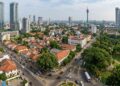
Colombo is arguably the easiest place in Sri Lanka to live without owning a vehicle.
The capital offers a combination of public buses, suburban railway services, taxis, tuk-tuks and ride-hailing platforms such as PickMe and Uber. Climate Action International Symposium
Many everyday services are also accessible through delivery platforms, reducing the need to travel for groceries, meals and other household essentials.
For foreign residents living in central Colombo, particularly those working remotely or living close to their workplace, owning a car may be more of a convenience than a necessity.
There are several advantages to living without a car in Colombo:
- No concerns about finding parking.
- No vehicle maintenance or insurance expenses.
- Easy access to ride-hailing services in many neighbourhoods.
- No substantial initial investment in a vehicle.
- Less stress associated with navigating unfamiliar traffic conditions.
- The ability to choose different transport options depending on the journey.
However, Colombo’s traffic congestion can affect journey times regardless of whether you own a vehicle or use a taxi. Ride-hailing availability may also fluctuate during heavy rain, rush hours and public holidays.
Families living in suburban areas with children attending international schools may find that owning a car becomes considerably more practical.
Living on Sri Lanka’s southern coast
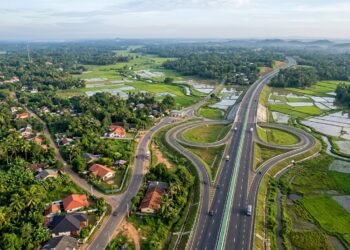
The southern coast is increasingly attractive to foreign residents, remote workers, retirees and people purchasing holiday homes.
Popular locations such as Galle, Unawatuna, Ahangama, Weligama, Mirissa and Tangalle offer very different experiences when it comes to transport.
Living within an established coastal town, close to restaurants, supermarkets and other everyday services, can make car-free living relatively straightforward. Tuk-tuks, local buses and railway services connecting parts of the southern coast provide alternatives to private vehicles.
However, the situation changes when you move further inland.
A beautiful villa surrounded by tropical vegetation may offer privacy, tranquillity and more space, but it may also leave you dependent on private transport for almost every daily activity.
Ride-hailing services may be less reliable outside larger towns, particularly late in the evening or during poor weather. Having the contact details of several reliable local tuk-tuk drivers can therefore be more useful than relying exclusively on an app.
For foreign property buyers, transport accessibility should be considered before purchasing a house, not after moving into it.
A cheaper property in an isolated location may ultimately result in higher transportation expenses and a greater dependence on other people.
Living in Kandy and Sri Lanka’s hill country
Kandy offers public buses, railway connections, taxis and tuk-tuks, making it possible to live without a private vehicle in well-connected neighbourhoods.
However, the city’s mountainous terrain creates challenges that are less noticeable in coastal locations.
A supermarket that appears to be within walking distance on a map may require navigating steep roads, uneven surfaces and areas without suitable pavements.
In locations such as Nuwara Eliya, Ella and smaller hill-country communities, access to private transport becomes more valuable, particularly for residents living outside town centres.
Weather conditions, winding roads and longer distances between essential services can also influence transport decisions.
For retirees, families with young children and people with limited mobility, having access to a car or a reliable private driver may significantly improve their quality of life.
Living in rural Sri Lanka
Rural Sri Lanka can offer lower accommodation costs, larger properties and a quieter lifestyle. However, transport is one of the potential disadvantages that foreign residents should carefully evaluate.
Although public buses serve many smaller communities, the availability and frequency of services vary considerably. Railway services are limited to established routes, and app-based taxis may not always be available.
Without access to private transport, relatively simple activities can become time-consuming, including:
- Grocery shopping.
- Visiting a hospital or medical clinic.
- Taking children to school.
- Attending business meetings.
- Travelling after dark.
- Visiting government offices and banks.
Owning a car is not necessarily the only solution. Establishing an arrangement with a reliable local driver may provide sufficient independence without the financial commitment of vehicle ownership.
Nevertheless, anyone considering a remote property should investigate transport options before signing a rental agreement or completing a purchase.
How transport needs differ across Sri Lanka
| Location | Living without a car | Recommended alternatives |
|---|---|---|
| Central Colombo | Generally straightforward | Ride-hailing, buses, trains and walking |
| Colombo suburbs | Depends on daily commitments | Ride-hailing, trains and school transport |
| Negombo | Often practical near the town centre | Tuk-tuks, taxis and buses |
| Galle | Relatively practical in central areas | Tuk-tuks, buses and trains |
| Ahangama and Weligama | Possible near main transport routes | Tuk-tuks, buses and trains |
| Mirissa | Possible in well-connected areas | Tuk-tuks and local buses |
| Tangalle | More dependent on property location | Local drivers and tuk-tuks |
| Kandy | Possible in central neighbourhoods | Tuk-tuks, buses and taxis |
| Nuwara Eliya and hill country | More challenging outside towns | Private drivers and car hire |
| Rural and inland areas | Often challenging | Private vehicles or regular drivers |
What are the alternatives to owning a car in Sri Lanka?
Tuk-tuks
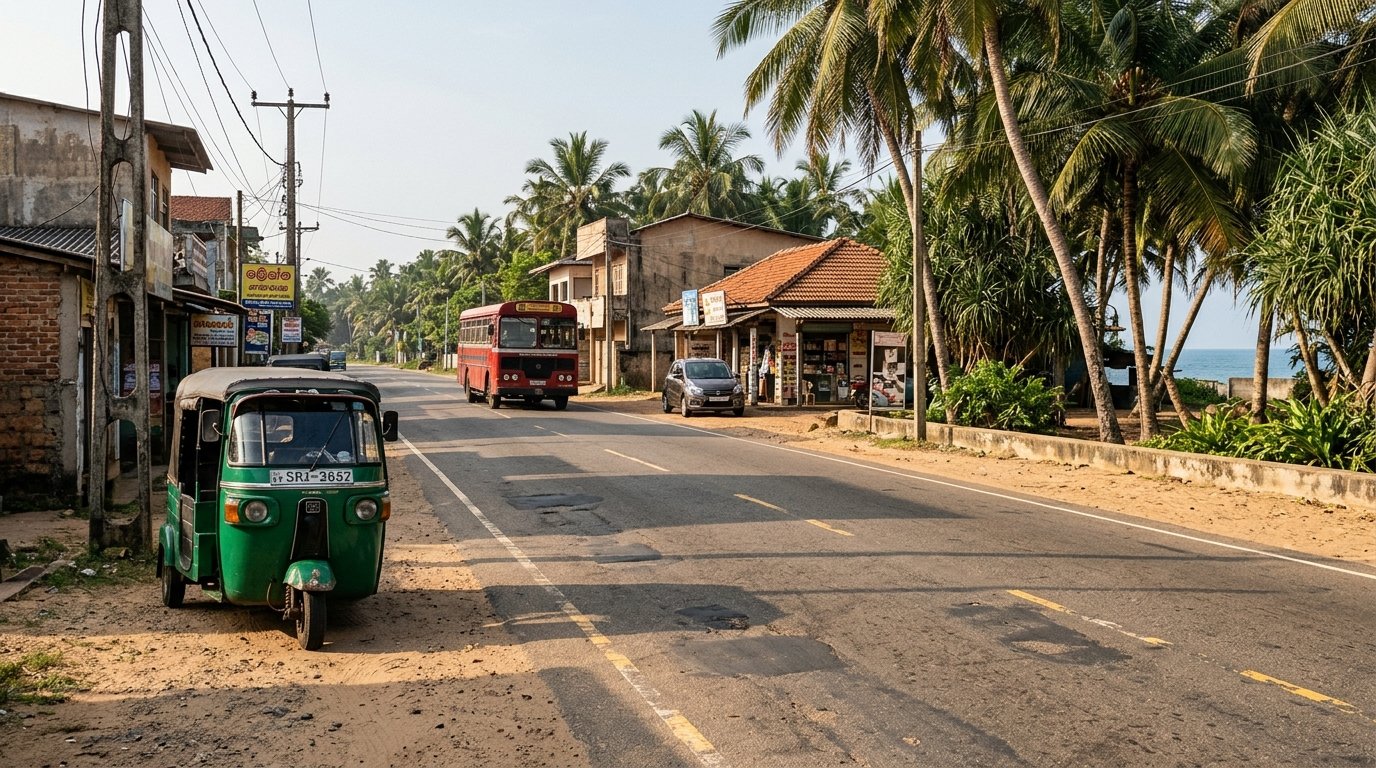
Tuk-tuks are one of the most practical forms of everyday transport in Sri Lanka. They are particularly useful for short journeys, shopping, visiting restaurants and travelling to nearby towns.
For expats living alone or as a couple, tuk-tuks can replace many of the journeys for which they would normally use a car in their home country.
Advantages include affordability, convenience and the ability to navigate narrow roads.
However, tuk-tuks may not be suitable for longer journeys, travelling with large amounts of luggage or transporting young children who require appropriate child safety seats. They also offer considerably less protection in the event of a road accident than a conventional car.
PickMe and Uber
Ride-hailing platforms have made living without a car considerably easier for many foreign residents.
PickMe offers several vehicle categories, including tuk-tuks, cars, minivans and vans. Uber provides an alternative in supported locations.
These services offer several advantages:
- Estimated fares before booking.
- GPS-based collection and destination tracking.
- Different vehicle categories.
- Cash and electronic payment options, subject to availability.
- Less need to negotiate individual journey prices.
However, downloading an app does not guarantee that a driver will be available at your location. Residents outside major urban areas should have alternative transport arrangements.
Public buses
Sri Lanka has an extensive bus network operated by both state-owned and private transport providers.
Buses can be particularly useful for residents travelling regularly between towns or living near established transport corridors.
Although public buses are generally an economical option, foreign residents should consider overcrowding, comfort, accessibility, journey times and the availability of services outside peak hours.
Sri Lanka is also investing in modernising its public transport system. Improvements could gradually make buses a more attractive alternative to private vehicle ownership.
Read more: Sri Lanka is modernising its bus network: What it means for expats, residents and travellers
Trains
Sri Lanka’s railway network is not exclusively a tourist attraction. It can also provide a practical and affordable means of everyday transport.
Residents living near railway stations along the western and southern coastal corridors may find trains particularly useful for travelling between towns or commuting to Colombo.
However, delays, overcrowding and limited connections to certain destinations mean that trains are often best used alongside other forms of transport.
Useful resources include the official online seat reservation platform.
Hiring a private driver
Hiring a private driver does not have to be limited to holidays or airport transfers.
Foreign residents can arrange transport on an occasional, daily, weekly or monthly basis, depending on their requirements and the services available locally.
This may be particularly attractive to:
- Retirees who prefer not to drive.
- Families with young children.
- Foreign business owners who travel frequently.
- Seasonal residents who spend several months a year in Sri Lanka.
- People uncomfortable with local driving conditions.
Hiring a driver when needed allows residents to enjoy many of the benefits of private transport without purchasing, maintaining or insuring a vehicle themselves.
Renting a car
For seasonal residents, renting a car may be a practical compromise between owning a vehicle and relying entirely on taxis.
Long-term rental arrangements can be worth investigating, particularly for foreigners spending three to six months a year in Sri Lanka.
Before entering a rental agreement, check insurance coverage, mileage restrictions, deposits, breakdown assistance, accident liability and maintenance responsibilities.
Foreign residents intending to drive must also ensure they hold the appropriate driving authorisation.
Is owning a car cheaper than using taxis in Sri Lanka?
One of the biggest mistakes foreign residents make when comparing transport costs is considering only fuel expenses.
The real cost of owning a vehicle includes the purchase price, depreciation, insurance, annual revenue licence, servicing, repairs, tyres, fuel, parking and potentially financing costs.
There is also an opportunity cost. Money invested in a vehicle cannot simultaneously be used for purchasing property, developing a business or generating investment income.
An illustrative monthly transport budget
The following examples demonstrate how different lifestyles could affect monthly transport expenditure without owning a car.
| Monthly expenses | Remote worker | Active couple | Family with children |
|---|---|---|---|
| Tuk-tuk journeys | LKR 10,000 | LKR 15,000 | LKR 10,000 |
| Car taxis | LKR 8,000 | LKR 20,000 | LKR 30,000 |
| Public transport | LKR 2,000 | LKR 3,000 | LKR 2,000 |
| Private driver and longer journeys | LKR 5,000 | LKR 15,000 | LKR 20,000 |
| School transport | — | — | LKR 30,000 |
| Total monthly expenditure | LKR 25,000 | LKR 53,000 | LKR 92,000 |
| Total annual expenditure | LKR 300,000 | LKR 636,000 | LKR 1,104,000 |
These figures are hypothetical budgeting examples, not surveyed market averages or verified current transport quotations. Actual expenditure will depend on location, journey frequency, distance, vehicle type and service provider.
For someone working remotely and living close to essential services, purchasing a car may be difficult to justify financially.
For a family spending a substantial amount on school transport, taxis and private drivers every month, vehicle ownership may become a more attractive proposition.
However, the comparison should always include the full annual cost of owning a vehicle rather than simply comparing taxi fares with fuel expenses.
Living without a car as a family with children
Families face different transport challenges from single expats, couples and digital nomads.
School journeys, extracurricular activities, medical appointments, birthday parties and weekend trips can significantly increase the number of journeys required each week.
Before deciding whether to purchase a vehicle, parents should investigate whether their chosen school provides transport and whether reliable private school transport services are available.
Other important considerations include the availability of suitable child car seats, seat belts, air conditioning and transport during heavy rainfall.
For families living close to an international school in Colombo, car-free living may be manageable. For families living further away from schools and essential services, having a dedicated vehicle may be considerably more practical.
Can retirees live comfortably in Sri Lanka without a car?
Many retirees move to Sri Lanka to enjoy a slower pace of life, a warmer climate and potentially lower living costs.
For those living in a well-connected neighbourhood, owning a car may be unnecessary. A combination of taxis, grocery deliveries and occasional private transport could provide sufficient independence.
However, healthcare accessibility should be a priority when choosing where to live.
Retirees should consider how easily they can reach hospitals, pharmacies and medical specialists, including outside normal business hours.
A remote property may appear attractive during a holiday, but limited transport options can become a significant disadvantage as mobility and healthcare needs change.
Do digital nomads need a car in Sri Lanka?
Digital nomads are among the foreign residents most likely to manage comfortably without owning a vehicle.
Remote working eliminates the need for a daily commute, while accommodation close to restaurants, coworking spaces and supermarkets can reduce regular transport requirements.
Locations such as central Colombo, Galle, Ahangama and Weligama may offer suitable conditions for this lifestyle, depending on the neighbourhood.
For someone staying in Sri Lanka for only a few months, buying a car can also introduce unnecessary administrative responsibilities and the challenge of reselling or storing it before departure.
Occasional car hire, tuk-tuks and ride-hailing services may offer greater flexibility.
Driving in Sri Lanka as a foreigner
Foreigners considering purchasing or renting a vehicle should not assume that their existing national driving licence automatically authorises them to drive in Sri Lanka.
The appropriate driving authorisation depends on the individual’s circumstances, residency status, licence and vehicle category.
The Department of Motor Traffic also operates a foreign driving licence conversion service at Bandaranaike International Airport for eligible international visitors. Airport Lanka
Foreign residents should confirm the applicable requirements directly with the Department of Motor Traffic before driving.
Beyond legal requirements, driving in Sri Lanka can take time to adjust to. Drivers must become accustomed to mixed traffic, buses, motorcycles, tuk-tuks, pedestrians, narrow roads and different overtaking practices.
For some foreign residents, employing a driver is not simply a financial decision but a way of reducing the stress associated with driving.
How transport accessibility affects property decisions
Transport accessibility is an often-overlooked consideration when foreigners rent or purchase property in Sri Lanka.
A house located several kilometres from the main road may offer more land, privacy and a lower purchase price. However, the savings could be partially offset by increased transport expenses and additional travelling time.
Before committing to a property, investigate the following:
- Distance to the nearest supermarket, pharmacy and hospital.
- Availability of PickMe, Uber and local drivers.
- Distance to the nearest bus stop or railway station.
- Road conditions during heavy rainfall.
- Availability of transport after dark.
- Accessibility for delivery services.
- Travel time to schools and workplaces.
- Vehicle access, parking and turning space.
Importantly, do not rely exclusively on distances displayed on Google Maps. A short journey may take considerably longer because of congestion, road conditions or geographical terrain.
For foreign property investors, accessibility may also influence the property’s appeal to future tenants and buyers.
Should seasonal residents buy a car?
Sri Lanka attracts foreigners who divide their time between the island and another country.
For these residents, vehicle ownership introduces additional considerations.
A car purchased for six months of annual use still requires storage, maintenance and appropriate administrative arrangements during the remaining months.
Long periods without use can also create problems with batteries, tyres and other vehicle components, particularly if the car is stored in unsuitable conditions.
Depending on the length of each stay and the number of journeys required, long-term car rental or an arrangement with a private driver may be more financially efficient.
Should you buy a car immediately after moving to Sri Lanka?
Unless your personal circumstances make private transport essential from the beginning, it may be worth spending the first one to three months in Sri Lanka without purchasing a vehicle.
During this period, keep a record of your transport expenditure, waiting times, regular destinations and any journeys that are difficult to complete without a car.
This will allow you to make a decision based on your actual lifestyle rather than assumptions carried over from living in another country.
For some residents, the experience will confirm that a car is essential. Others may discover that they can maintain their independence without the financial and administrative responsibilities of vehicle ownership.
Final thoughts
You do not necessarily need to own a car to enjoy a comfortable life in Sri Lanka.
For people living in well-connected urban or coastal neighbourhoods, a combination of tuk-tuks, ride-hailing services, public transport and occasional private car hire may be entirely sufficient.
For families with children, residents of isolated properties and individuals who travel frequently for business, owning a car may provide greater convenience and independence.
The distinction is important: needing access to a car is not the same as needing to own one.
Ultimately, choosing the right location to live may have a greater impact on your transport expenses, independence and quality of life than deciding which vehicle to purchase.
Disclaimer: This article is provided for general informational purposes only and does not constitute legal, financial or professional transport advice. Transport availability, prices, driving licence requirements and vehicle regulations may change. Readers should verify current requirements with the relevant Sri Lankan authorities and transport providers before making financial or relocation decisions.
How to Get a Sri Lankan Driving Licence as an Expat
Sri Lanka is modernising its bus network: What it means for expats, residents and travellers